
Trending
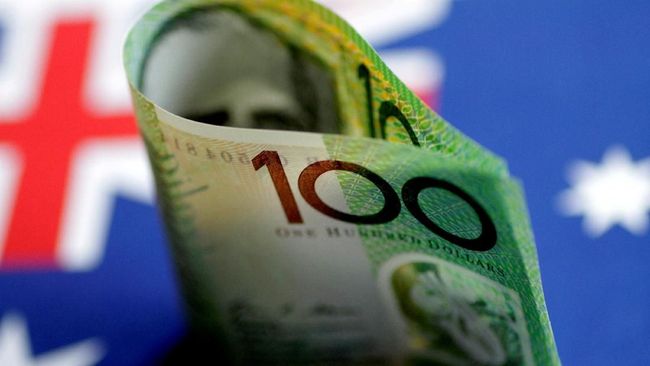
audusd
Source: Newsmaker.id
The AUD/USD pair underwent a correction after reaching a monthly high, snapping a four-session winning streak during Thursday’s (October 22) trading. Nevertheless, the Australian dollar remained above the psychological 0.7000 level, bolstered by a weaker US dollar and expectations of a tighter monetary policy from the Reserve Bank of Australia (RBA).
Market sentiment was dampened by growing concerns over an escalating conflict in the Middle East. This prompted investors to reduce their exposure to riskier assets, putting pressure on the Australian dollar—a currency sensitive to global sentiment. However, this pressure remained contained, as the outlook for RBA policy continued to provide support.
RBA Assistant Governor Christopher Kent noted indications that the neutral interest rate is rising, both in Australia and globally. Meanwhile, Deputy Governor Andrew Hauser warned that third-quarter "trimmed mean" inflation could come in higher than anticipated, keeping the possibility of an interest rate hike on the table ahead of the RBA’s November 3 meeting.
Support for the AUD also emerged from China, Australia’s primary trading partner. China’s third-quarter economic growth, which outperformed expectations, boosted optimism regarding demand for commodities and provided a positive tailwind for the Australian dollar.
On the other hand, the US dollar continued to retreat from an 18-month high, touching a three-week low. US Treasury yields also pulled back from previous highs after several Federal Reserve officials signaled that there is no urgent need to raise interest rates at the upcoming October meeting.
Newsmaker Analysis: The AUD/USD pair retains fundamental support from the RBA’s hawkish stance, a strengthening Chinese economy, and a weaker US dollar. However, global risk sentiment and geopolitical uncertainty may limit further gains for the AUD. The next focus shifts to the Federal Reserve meeting and Australian inflation data, which will determine the policy direction for both central banks. (srh)
Source: Newsmaker.id