
Trending
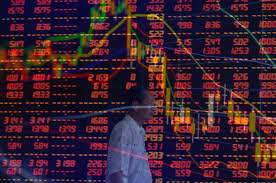
Nikkei
Source: Newsmaker.id
The Nikkei 225 index closed 1.82% lower at 67,777 on Tuesday (Oct 13), marking its fourth consecutive session of declines. This drop followed a sell-off in technology stocks on Wall Street and reflects growing investor caution regarding the artificial intelligence (AI) sector, particularly amidst rising funding costs.
The primary pressure stems from concerns over the massive capital expenditure by AI companies. Investors are beginning to question whether the enormous investments in AI infrastructure will ultimately generate commensurate revenue growth. Competition from Chinese chipmakers has also added pressure, following reports of progress in ChangXin Memory Technologies' (CXMT) new chip architecture technology.
Sentiment was further dampened after Broadcom CEO Hock Tan remarked that the AI boom has attracted investors employing strategies akin to gambling. Billionaire investor Ray Dalio also characterized the AI sector's condition as a "classic bubble," especially as interest rates rise and investors seek liquidity. These statements have reinforced concerns that technology company valuations have become excessive.
A sell-off was evident across major Japanese stocks. Kioxia Holdings plunged 13.3%, SoftBank Group fell 8.5%, Tokyo Electron dropped 7.2%, Taiyo Yuden declined 4.9%, and Advantest fell 2.9%. This weakness indicates that pressure is not limited to AI companies but is spreading to semiconductor firms and the technology supply chain—sectors that had previously been key drivers of the Nikkei's rally.
Newsmaker observes that this decline in the Nikkei is not merely a case of profit-taking; it also reflects a shift in investor perception regarding risks in the AI sector. If borrowing costs continue to rise while profit growth fails to keep pace with the scale of investment, pressure on technology stocks could persist. However, if the company's financial results remain strong and demand for chips and AI continues to grow, this correction could still prove to be a normalization phase following the technology sector's prolonged rally.