
Trending
Global & Economy
Source: Newsmaker.id
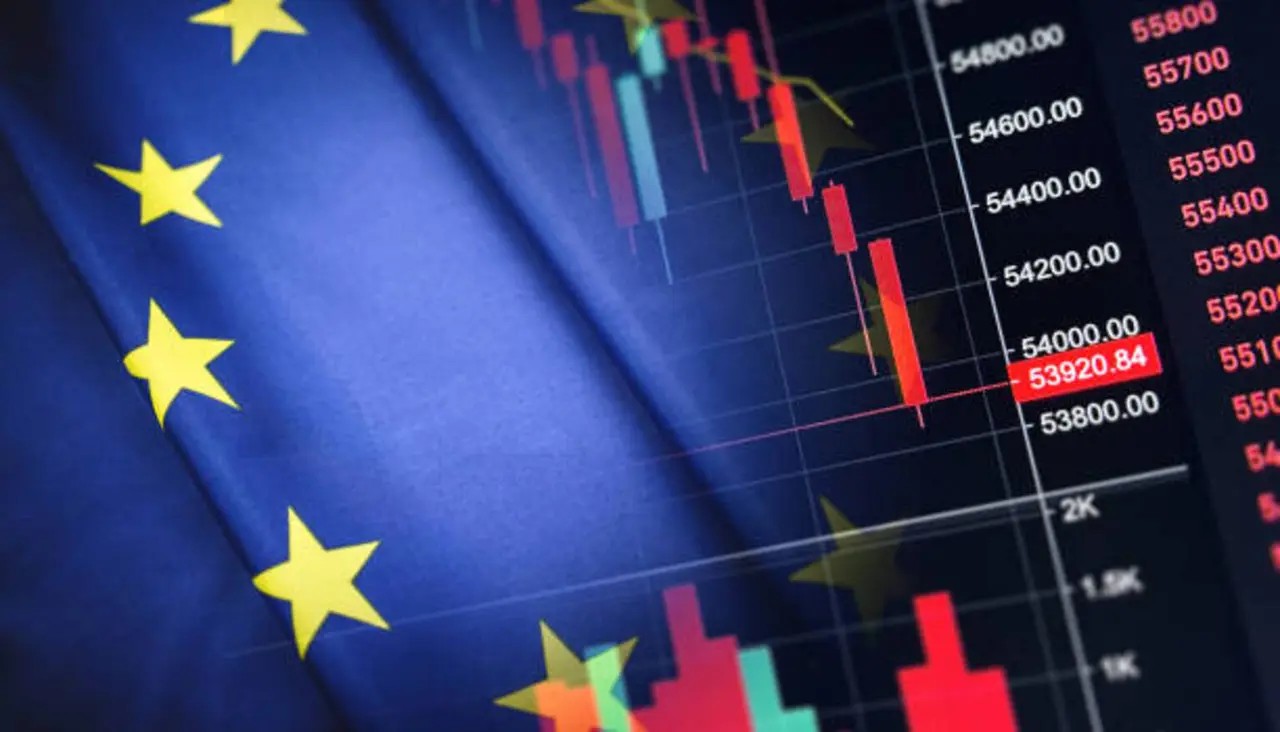
European stock markets weakened once more during Tuesday’s trading session (October 20, 2026), driven by growing investor concerns over social unrest in France and geopolitical tensions in the Middle East. The Stoxx Europe 600 index fell by 0.3%, while France’s CAC 40 index dipped 0.1%—following a decline of more than 1% in the previous session. These conditions have prompted investors to reduce their holdings in stocks and other risky assets amid mounting political and economic uncertainty in the region.
Market pressure has spread across several major European exchanges. Germany’s DAX index fell 0.4%, while the UK’s FTSE 100 and Italy’s FTSE MIB both declined by 0.2%. Although these losses remain relatively modest, they signal that investors continue to exercise caution. Meanwhile, the escalating conflict in the Middle East—which has pushed oil prices toward a five-month high—has further fueled concerns regarding inflation and economic growth in Europe.
The political situation in France has deteriorated as demonstrations over the high cost of living and declining quality of public services have escalated into riots, looting, and clashes with security forces. The French government has reportedly imposed nighttime restrictions in several major cities, including Paris and Nice. While intended to restore security, the prolonged social instability risks disrupting business operations and undermining investor confidence.
The impact of the unrest is also being felt in the French government bond market. During Monday’s trading, French sovereign bonds experienced their sharpest daily sell-off in nearly a month. Investors are increasingly demanding higher yields and risk premiums for holding French debt compared to German government bonds, which are perceived as a safer asset. This trend reflects growing anxiety regarding France’s fiscal stability and the potential for the pressure to spread to financial markets across the Eurozone. Looking ahead, the movement of European stock markets will largely depend on the French government's ability to quell unrest, developments in the Middle East conflict, and the earnings reports of major corporations. Should political uncertainty continue to escalate, stock markets and the euro could face renewed pressure, while demand for safe-haven assets—such as the US dollar and gold—may rise. Conversely, corporate earnings that exceed expectations could help mitigate market weakness. For investors, the turmoil in France is no longer merely a domestic security issue; it has become a risk that could impact confidence in European financial markets more broadly.