
Trending
Fiscal & Monetary
Source: Newsmaker.id
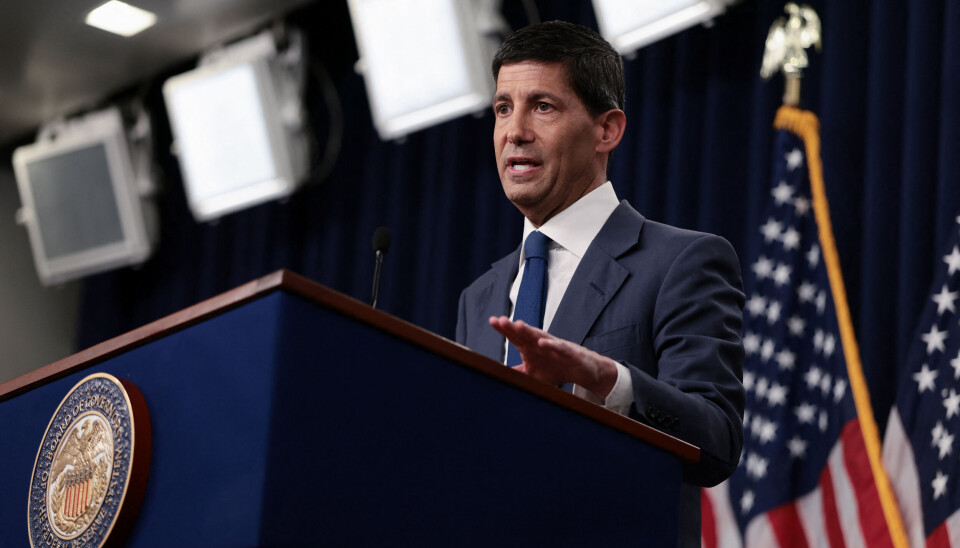
Federal Reserve official Kevin Warsh stated on Wednesday (Oct. 28) that the U.S. economy currently shows no signs of overheating, even as massive investments in the artificial intelligence (AI) sector begin to exert pressure on demand. According to Warsh, the overall state of the U.S. economy continues to trend toward positive development.
Warsh shared this perspective following the Federal Reserve’s decision to maintain its benchmark interest rate within the 3.75%–4.00% range. This decision indicates that the central bank prefers to monitor economic and inflation trends before determining its next policy move.
Warsh noted that the demand pressure stemming from the surge in AI investment is not yet significant enough to suggest that the economy is overheating. He argued that economic growth itself is not the primary driver of inflation and does not automatically make the Fed’s task of controlling prices more difficult.
Warsh also highlighted improvements in U.S. economic productivity. He noted that productivity has been trending upward, though it remains difficult to measure with absolute precision. He added that these productivity gains were evident even before the recent major advancements in superintelligent technology took center stage.
Rising productivity is a crucial factor, as it allows the economy to expand its production capacity without generating a commensurate increase in inflationary pressure. In the context of AI investment, productivity trends will remain a key focus for the Federal Reserve as it assesses whether economic growth is occurring at a healthy pace.
Warsh further emphasized that the Federal Reserve’s objective is not to “throw sand in the gears” of the economy. This suggests that the central bank does not intend for its monetary policy to overly constrain economic activity—particularly when growth and productivity continue to show positive momentum.
Newsmaker Analysis: Warsh’s remarks suggest that the Federal Reserve views U.S. economic growth and rising productivity as relatively supportive factors. Nevertheless, the future direction of policy will remain heavily dependent on how inflation and demand evolve. If inflation rises again, there remains room for tightening; meanwhile, continued improvements in productivity could provide a reason for the Fed to be less aggressive in tightening policy.
Source: Newsmaker.id