
Trending
Global & Economy
Source: Newsmaker.id
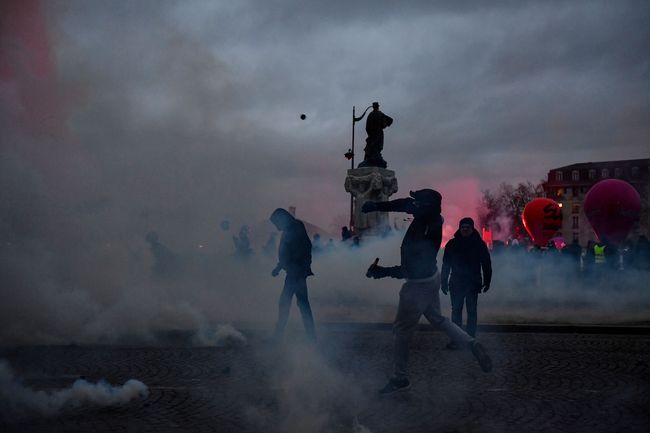
A wave of major demonstrations swept across several European countries over the weekend, with hundreds of thousands of people taking to the streets to protest the high cost of living, expensive housing, low wages, and deteriorating public services. The protests, which took place in France, Belgium, Italy, and Portugal on Saturday (October 17), reflect mounting social pressure stemming from economic issues that remain unresolved. France saw the largest demonstrations, with over 550,000 participants according to local authorities. Some of these actions escalated into clashes with security forces, looting, and the burning of public facilities, leaving governments under pressure to respond promptly to the public's demands.
At the heart of these protests is the issue of purchasing power. Although the rate of inflation in Europe has slowed compared to the previous period of surging prices, the costs of basic necessities, energy, transportation, and housing continue to weigh heavily on household budgets. This situation highlights that a decline in inflation does not necessarily mean a drop in the prices of goods; rather, it simply reflects a slowdown in the rate at which prices are rising. In Portugal, soaring property and rental prices have made housing increasingly unaffordable, while in Italy, citizens are demanding an increase in real wages. Meanwhile, demonstrations in Belgium were fueled by opposition to budget austerity measures and rising education costs.
Widespread public dissatisfaction adds to the challenges faced by European governments, which are striving to strike a balance between economic growth, fiscal stability, and inflation control. Demands for higher wages and increased subsidies could place further strain on national budgets—particularly in countries already burdened by high levels of public debt.
Conversely, overly aggressive austerity policies risk weakening consumption and exacerbating social tensions. This situation has also drawn the attention of the European Central Bank (ECB), as weakening economic activity may increase the need for monetary easing, while persistent pressure from energy prices and production costs continues to pose an ongoing inflation risk.
In global financial markets, heightened economic and social uncertainty in Europe could exert downward pressure on the euro, potentially strengthening the US dollar—particularly if investors increase their demand for dollar-denominated assets. However, any such strengthening will depend on economic developments in the United States and expectations regarding the Federal Reserve’s interest rate policy.
Meanwhile, gold may find support from an increased demand for "safe-haven" assets, should the demonstrations persist and raise concerns regarding regional stability. Nevertheless, a stronger US dollar and rising US bond yields could cap gains in the price of gold. Market participants will be closely monitoring the evolution of the protests, the responses from European governments, and the direction of ECB policy to gauge the subsequent impact on currency movements and precious metals. (CP)