
Trending
Global & Economy
Source: Newsmaker.id
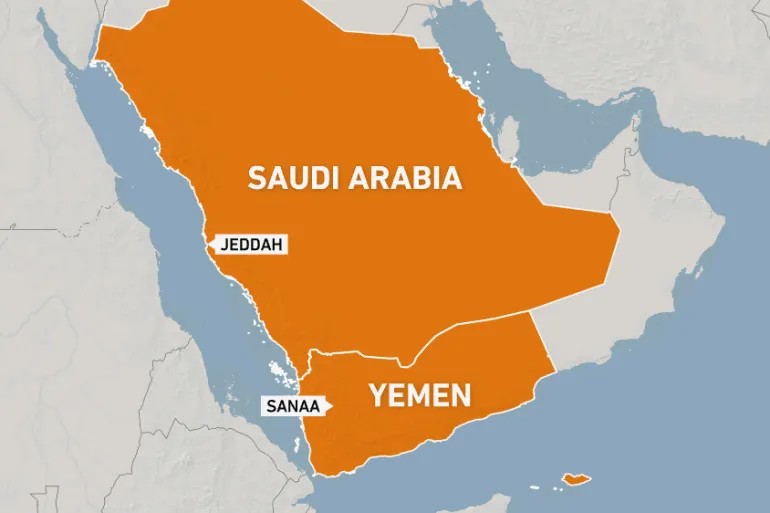
Conflict in Yemen has intensified again after the Houthi group reported that Saudi Arabian fighter jets launched massive airstrikes on several areas. This escalation follows the Houthis' expansion of control along the Red Sea coast and over strategic islands in the Bab el-Mandeb region.
Houthi military spokesman Yahya Saree claimed his group shot down a Saudi F-15 fighter jet and stated that up to 450 airstrikes had been carried out this week. These claims lack independent verification, and Saudi Arabia has not yet provided direct confirmation.
Tensions have also spread into Saudi territory, with the Houthis repeatedly launching attacks on the southern and western parts of the kingdom. Riyadh reported that its air defenses shot down a drone south of Mecca, while the Houthis denied targeting the holy city.
The escalation in Yemen has heightened concerns regarding global energy supplies. Saudi Arabia's East-West Pipeline remains disrupted following an attack last week, while shipping activity through the Strait of Hormuz has yet to return to normal. Brent crude is holding steady around US$108 per barrel, while US retail diesel prices have hit a new record high, exceeding US$6.30 per gallon.
Newsmaker Analysis: The Saudi-Houthi conflict now poses an additional risk to the oil market, alongside tensions in the Strait of Hormuz. If the East-West Pipeline remains shut and the Bab el-Mandeb strait becomes increasingly unsafe, supply disruptions could worsen, keeping a risk premium on Brent prices. Conversely, a restoration of the Saudi pipeline or diplomatic progress could alleviate pressure on energy prices. (arl)
Source: Newsmaker.id