
Trending
Global & Economy
Source: Newsmaker.id
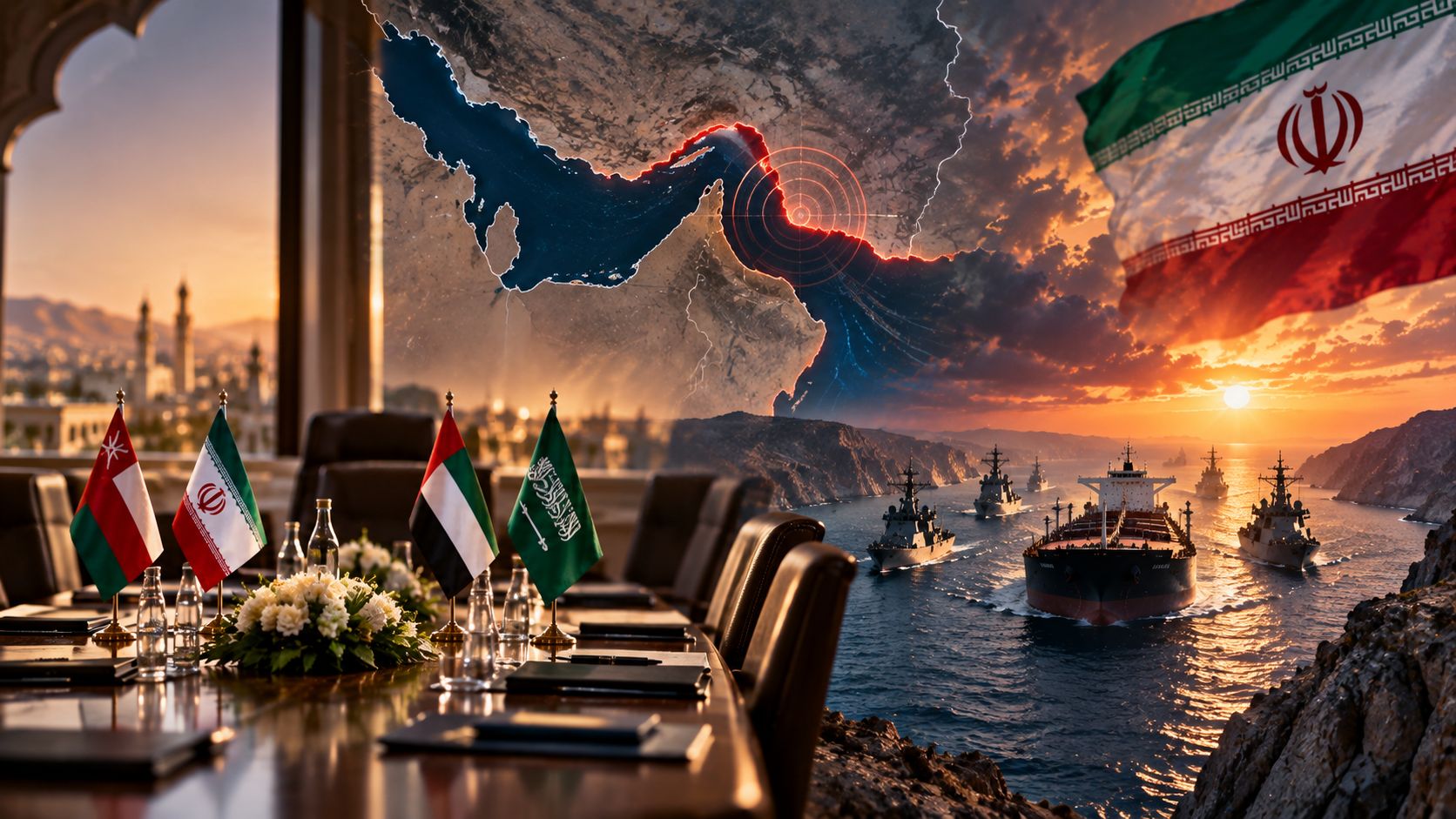
Hopes for a diplomatic breakthrough in the Middle East have waned following the postponement of a meeting scheduled for Monday between Iran and several Gulf states. Oman stated that the delay was intended to facilitate a broader consensus amidst rising regional tensions.
Iran had previously planned to attend the meeting to discuss an interim agreement regarding shipping lanes through the Strait of Hormuz. This waterway is vital to global energy trade; prior to the conflict, it facilitated the transit of approximately one-fifth of the world's oil supply.
The postponement coincides with a renewed deterioration of the security situation in the Hormuz region. The UKMTO reported that a vessel was struck by a projectile and caught fire, while Iran confirmed one fatality and four injuries among the crew of a commercial ship targeted in an attack. Commercial shipping traffic through the Strait also saw a sharp decline over the weekend.
Regional pressure has intensified after Saudi Arabia shut down its East-West pipeline following an attack, while Houthi forces continue to ramp up military activity near the Bab el-Mandeb Strait. These conditions present Gulf nations with a difficult choice: endure mounting economic pressure or reopen diplomatic channels with Iran.
Oil prices reacted to the situation with a rise of over 3% during Monday's trading. Disruptions to the Saudi pipeline, uncertainty surrounding Hormuz, and threats to Bab el-Mandeb have caused the market to once again factor in the risk of supply disruptions affecting millions of barrels of oil per day.
Newsmaker Analysis: The postponement of the meeting between Iran and Gulf states reduces the likelihood of near-term de-escalation. Until diplomatic efforts yield an agreement and security risks in the Hormuz and Bab el-Mandeb straits subside, energy markets are likely to maintain a significant risk premium. (arl)
Source: Newsmaker.id