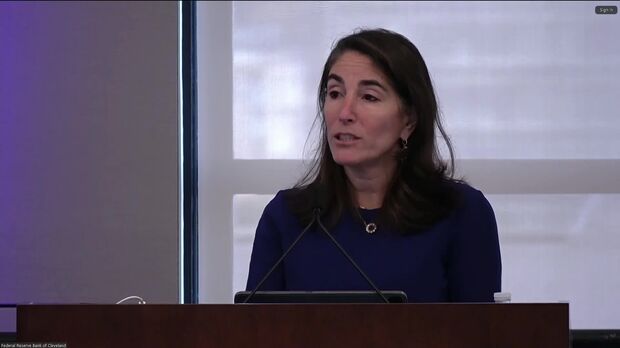
Hammack: Fed Reasonable to Hold Interest Rates, But Could Act Soon on Inflation
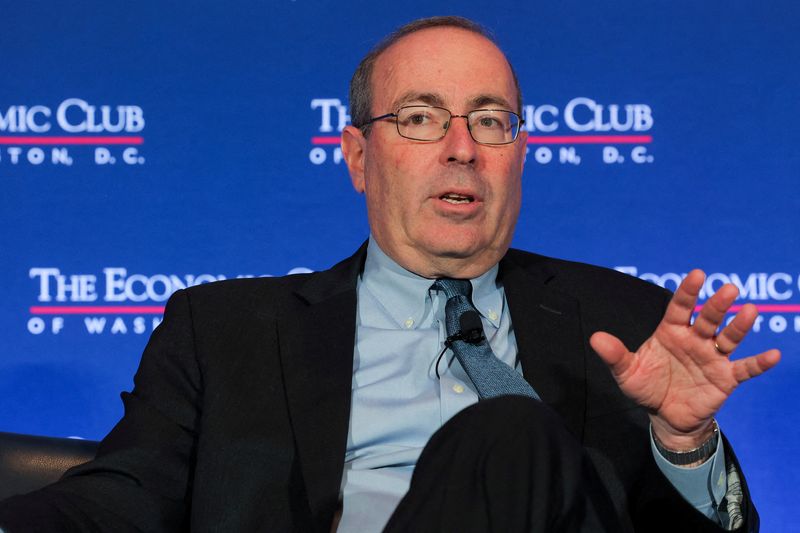
Cleveland Federal Reserve President Beth Hammack said holding interest rates steady for the time being is still reasonable amid the uncertain economic outlook. However, she said policymakers may need to act soon if recent data trends continue and the risks of “persistently high” inflation intensify.
In remarks prepared for an event in Cleveland on Tuesday, Hammack emphasized that her primary focus is on inflation, not the labor market. She assessed that the labor market remains resilient, with the unemployment rate at 4.3% in April, which she said is “right around” the definition of full employment.
Hammack also stated that the Fed’s benchmark interest rate is “probably not restrictive,” saying she has not heard businesses complaining about high interest rates as a deterrent to investment. She added that price pressures are “relatively broad” across a wide range of non-housing goods and services.
These comments come as more Fed officials have begun to express openness to the possibility of interest rate hikes, after the US-Israel war with Iran rekindled inflationary pressures. Hammack was one of three officials to dissent from the April meeting, opposing language in the post-meeting statement that suggested rate cuts would eventually continue.
The inflation data Hammack referred to showed the personal consumption expenditures (PCE) price index, the Fed's preferred metric, rose 3.8% in April from a year earlier—the largest increase since 2023, according to data released last week. Hammack warned that waiting for "definitive evidence" that inflation is entrenched could force larger policy adjustments, at a higher cost.
For the market, the emphasis on inflation risks reinforces the bias that interest rates could be tighter or stay higher for longer, which generally affects yields and the dollar and reshapes the valuation of risky and non-yielding assets. Fed officials are scheduled to meet again on June 16-17 for the first meeting chaired by new Fed Chairman Kevin Warsh—with the focus on the direction of core inflation, domestic demand indicators, and signs of whether current policy is truly restrictive enough.
5 Key Points
-Hammack believes interest rates are "reasonably" on hold, but the Fed could act quickly if inflationary trends persist.
-He is more concerned about inflation than the labor market; April's unemployment rate of 4.3% is considered close to full employment.
-Hammack said interest rates are likely "unconstrained" and price pressures are broad-based across categories.
-PCE rose 3.8% year-on-year in April, the largest increase since 2023; delaying a response is seen as risking higher adjustment costs.
-The next Fed meeting is June 16–17, the first under new Fed Chair Kevin Warsh. (gn)
Source: Newsmaker.id