Trump's Three Options on Iran: The Oil Risk Isn't Over Yet!
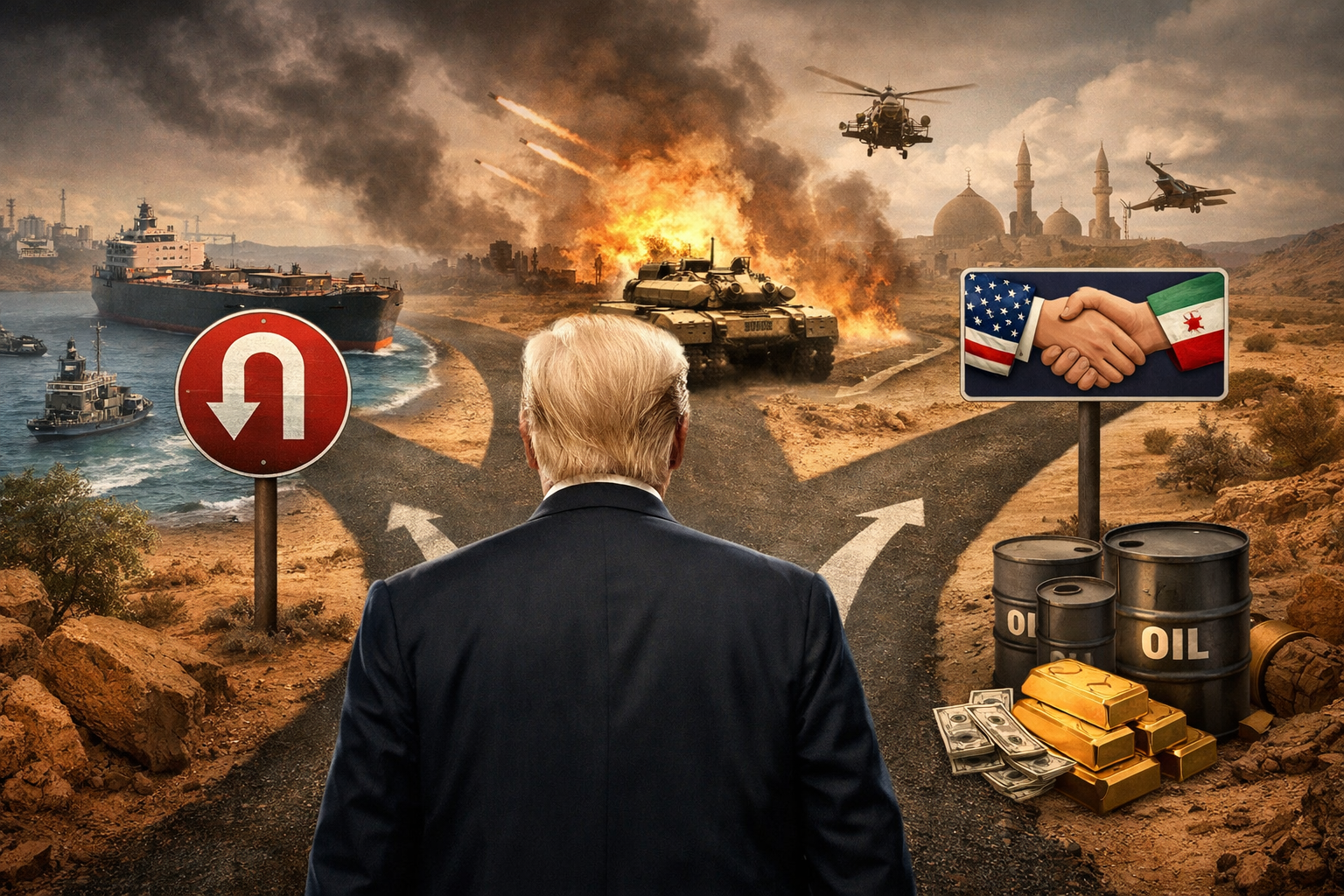
RBC Capital Markets assesses that US President Donald Trump now has three main paths to take regarding a war with Iran, and if the conflict drags on, oil prices could continue to rise. This scenario framework illustrates how Washington's decisions will determine whether the energy risk premium will decrease or increase.
The first scenario is a "U-turn": the US could choose to withdraw or de-escalate, but the consequence would be that Iran would be able to operate what RBC calls the increasingly profitable "Hormuz EZ Pass." Under this route, shipping flows through the Strait of Hormuz are expected to remain below pre-war levels.
RBC assesses that this situation is likely to be unacceptable to Israel or neighboring countries. This means that even if the escalation is eased, political and security tensions in the region could persist, preventing the restoration of energy flows from proceeding normally.
The second scenario is escalation. RBC notes that the US is signaling that it "may" attempt to reopen the Strait of Hormuz or seize the export hub on Kharg Island. However, RBC stresses that there is no guarantee that a troop increase will result in a quick victory.
According to RBC, Iran could rely on a "survive-and-exhaust" doctrine, which risks prolonging the conflict while maintaining supply disruptions. In this scenario, oil volatility is likely to remain high as the market assesses the risk of more persistent damage and logistical bottlenecks.
The third scenario involves negotiations prioritizing freedom of navigation in Middle Eastern waters. However, RBC notes that this option does not appear to be the most favorable at this stage, thus tending to give greater weight to the other two scenarios.
RBC also highlights the Houthi entry into the conflict. So far, they have only targeted Israel directly, but have warned of potential threats to Bab al-Mandeb. This adds a layer of risk to shipping lanes beyond Hormuz and expands the energy supply chain's vulnerability.
Going forward, if the scenario of escalation or prolonged conflict becomes more prevalent, the oil risk premium is likely to remain stable or increase. In a risk-off environment, the dollar could potentially remain supported by hedging flows. While gold could receive a defensive boost, market sensitivity to the path of interest rates and energy inflation could make gold's response less linear, so its ultimate direction will largely depend on whether the market values the risk of war as greater than the pressure from monetary policy expectations. (asd)
Source: Newsmaker.id