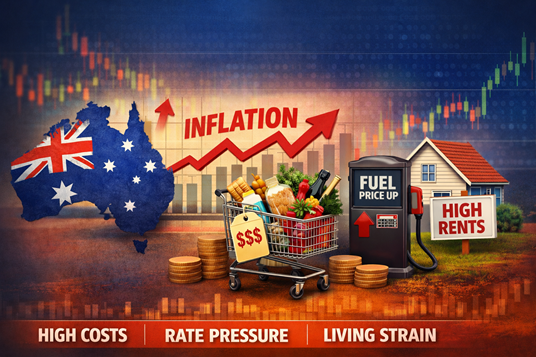
Australian Inflation Remains High Ahead of Iran Oil Shock, RBA Faces Risk of Second Round
Australian inflation remained high in February, even before the Iran war disrupted Middle Eastern energy supplies and led to a surge in gasoline prices. This data reinforces the signal that price pressures in the economy have not fully subsided, so an energy shock risks arriving while underlying inflation remains sticky.
The closely watched core inflation measure, the trimmed mean, rose 3.3% year-on-year—slightly below the 3.4% forecast—according to the Australian Bureau of Statistics. On a monthly basis, the core indicator rose 0.2%, slowing from 0.3% in January. The RBA's target is in the middle of the 2-3% range, so this level remains above target.
Market reaction was relatively limited because the figures came before the impact of the war had penetrated domestic prices. The Australian dollar weakened briefly, then recovered to around US$0.70, while the 3-year bond yield fell by 13 basis points. Market participants reduced the probability of a May interest rate hike to around 54%, from around 60% before the release.
The Reserve Bank of Australia (RBA) raised interest rates two weeks ago for the second consecutive time to 4.1%, stressing that inflation remains too high and the risk of second-round effects from energy is a concern. At the same time, financial markets still see the possibility of two more hikes this year remaining open, particularly if energy shocks push inflation back up.
The Iran conflict has thrown energy markets into a volatile phase, with the risk of tighter supplies through the Strait of Hormuz. Goldman Sachs estimates that major disruptions through the middle of next month could see Brent average around US$105 in March and US$115 in April before falling towards US$80 in the fourth quarter. In Australia, activity data has also begun to weaken: the services PMI turned into a contraction in March, and consumer sentiment fell to a record low due to a combination of rising oil prices and higher borrowing costs.
The February inflation mix showed headline CPI rising 3.7% year-on-year, slightly lower than the 3.8% forecast. The largest contributor was housing (+7.2%), followed by food/non-alcoholic beverages, and recreation and culture. Electricity costs rose 37% in the 12 months to February, while motor fuel prices were still down 3.4% before the Middle East escalation—signaling potential energy inflation pressures in the next release.
Source: Newsmaker.id