
Trending
Gold Corner
Source: Newsmaker.id
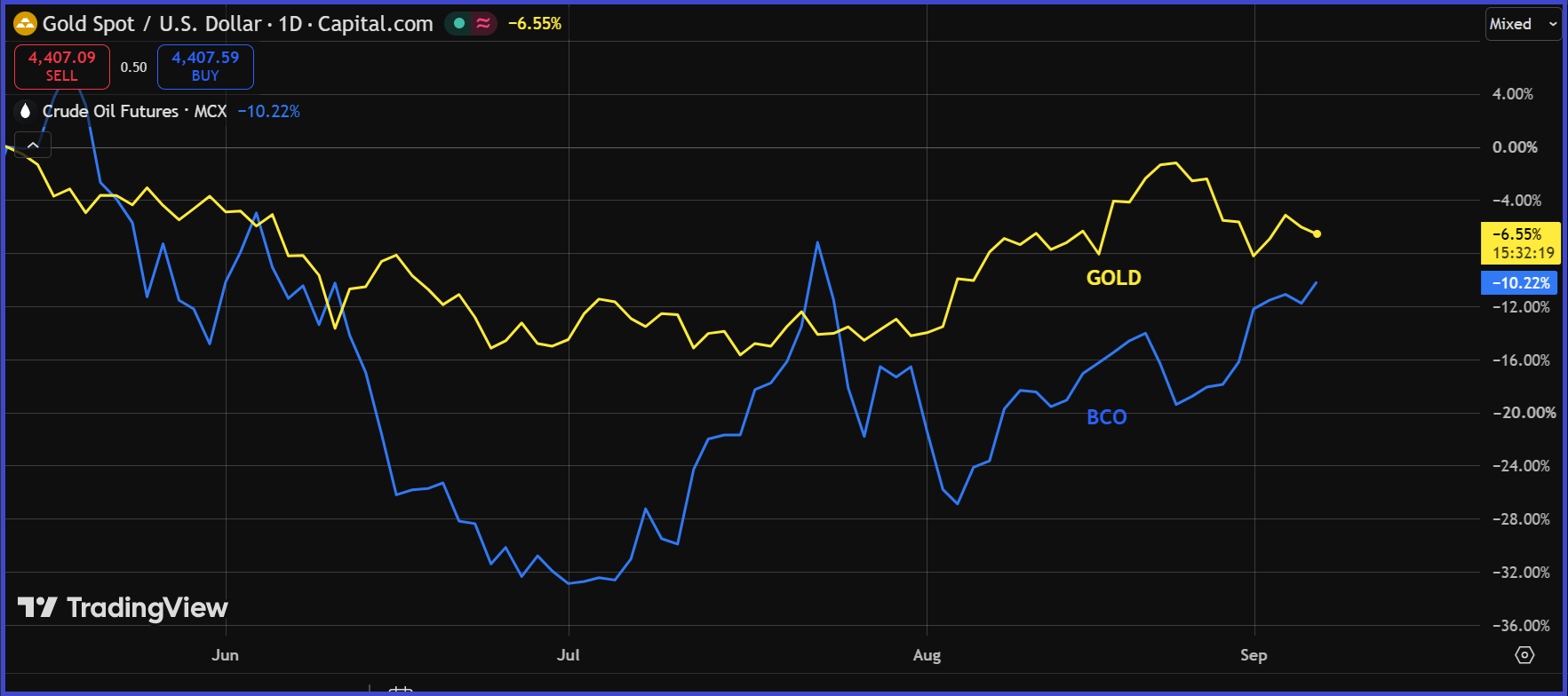
Gold moved with high volatility throughout the period. Its price action was mainly driven by shifting expectations for Federal Reserve policy, movements in the U.S. Dollar, Treasury yields, U.S. labor market data, and developments in energy prices.
At the beginning of the period, gold came under pressure after hawkish comments from Federal Reserve Chair Kevin Warsh increased expectations for a possible interest rate hike. A surge in oil prices amid escalating tensions between the United States and Iran also raised concerns about renewed inflationary pressure. This pushed Treasury yields and the U.S. Dollar higher, reducing the appeal of non-yielding assets such as gold.
Selling pressure then intensified, sending gold down by more than 2%. A stronger U.S. Dollar, rising global bond yields, and elevated energy prices encouraged markets to price in the possibility of a tighter Federal Reserve policy stance. From a technical perspective, selling pressure also accelerated after several key support levels were breached.
Gold later began to recover as the U.S. Dollar and Treasury yields pulled back from their highs. ADP data showed weaker-than-expected private-sector job growth, easing concerns that the labor market remained excessively strong. This reduced expectations for further monetary tightening and encouraged bargain buying, allowing gold to rebound by more than 1%.
The recovery continued after Federal Reserve Governor Christopher Waller delivered a more dovish signal. Waller expressed support for keeping interest rates unchanged if inflation continued to ease. His remarks reduced expectations for a rate hike, pushed the U.S. Dollar and Treasury yields lower, and helped gold rise by around 2.3%.
Pressure returned after the Non-Farm Payrolls report showed job growth of 162,000, above market expectations. The unemployment rate remained unchanged at 4.1%, indicating that the U.S. labor market remained relatively strong. The data revived expectations for a tighter Federal Reserve policy stance, strengthening the U.S. Dollar and Treasury yields and pushing gold down by around 1%.
Overall, gold experienced sharp two-way swings but still managed to post a modest gain. The main sources of pressure were a stronger U.S. Dollar, higher Treasury yields, elevated energy prices, and stronger labor market data. Meanwhile, weaker ADP figures and dovish comments from Federal Reserve officials provided temporary support.
Market attention now turns to U.S. inflation data, particularly the Producer Price Index (PPI) and Consumer Price Index (CPI). Higher-than-expected inflation could strengthen expectations for another interest rate hike and weigh on gold. Conversely, softer inflation could reduce monetary tightening expectations and ease pressure on the precious metal.
Brent crude oil rose sharply throughout the period, mainly driven by escalating tensions between the United States and Iran and growing concerns over the security of the Strait of Hormuz.
Brent climbed above US$90 per barrel after the United States and Iran exchanged attacks again for the first time in about a month. Concerns intensified after U.S. forces targeted Iranian military assets amid reports of preparations to deploy mines in the Strait of Hormuz. The growing risk of supply disruptions increased the geopolitical risk premium in oil prices.
The rally then strengthened, with Brent gaining around 5% and approaching US$95 per barrel, its highest level since late July. The rise followed fresh U.S. strikes on Iranian targets near the Strait of Hormuz after two oil tankers were attacked. U.S. President Donald Trump also threatened a much stronger response if Iran retaliated.
After the strong rally, Brent became more volatile around the US$95 level. The market began balancing the risk of supply disruptions caused by the Middle East conflict against signs that crude oil supplies were still flowing to the market. This limited further price movement.
Oil prices later edged higher and remained close to a six-week high. Investors continued to monitor developments in the U.S.-Iran conflict and their potential impact on oil flows through the Strait of Hormuz. Iran also claimed that it had launched attacks on U.S. military bases in the region.
Brent eventually held near US$95 per barrel and recorded a weekly gain of almost 9%, one of its strongest weekly performances since mid-July. Renewed exchanges of attacks between the United States and Iran kept geopolitical risks elevated, particularly due to threats to oil production, energy infrastructure, tankers, and major shipping routes.
Overall, oil prices were supported by rising geopolitical risks in the Middle East. The Strait of Hormuz remained a key focus because of its importance to global oil trade. As long as the conflict continues and the risk of supply disruptions remains elevated, oil prices may stay supported. However, if supply flows remain normal and geopolitical tensions ease, Brent could face a corrective pullback.
Gold remains volatile following pressure from stronger-than-expected NFP data, a firmer U.S. Dollar, and higher Treasury yields. However, geopolitical risks and potential shifts in interest rate expectations could help limit further downside. Over the coming week, gold's direction is likely to be heavily influenced by U.S. inflation data, particularly PPI and CPI.
From a technical perspective, the 4,380–4,400 area serves as the initial support zone, while 4,430–4,450 acts as a key pivot area. Important resistance is located at 4,480–4,500.
As long as the price remains above 4,300, the medium-term bullish structure has not been completely broken. However, a daily close below 4,300 could open the door to a deeper correction.
If gold manages to hold above 4,400 and breaks through 4,500, upside momentum could extend toward 4,550, followed by 4,600. If bullish momentum strengthens further, the 4,650–4,670 area could come back into focus.
This scenario would gain additional support if PPI or CPI comes in below expectations, reducing expectations for another Federal Reserve rate hike.
If gold fails to hold the 4,380–4,400 support zone, selling pressure could push prices toward 4,330–4,300.
A convincing break below 4,300 could open the way toward 4,250–4,280, followed by 4,200. The bearish scenario would become stronger if U.S. inflation data comes in above expectations, pushing the U.S. Dollar and Treasury yields higher.
Unless a strong breakout occurs, gold could consolidate within the 4,380–4,500 range. The 4,500 level remains the key threshold for further upside, while 4,380 serves as an early warning level for renewed selling pressure. The 4,300 area remains the critical level for preserving the medium-term bullish structure.
Note: This scenario is analytical in nature and may change depending on economic data, U.S. Dollar movements, Treasury yields, and geopolitical developments.
BCO/Brent closed at around US$95.84 and continues to show a bullish technical bias. Price remains within a higher-high and higher-low structure, while the US$95–96 area has become an important zone that could act as support after previously serving as resistance.
As long as Brent holds above US$94–95, the upside remains open toward US$97.50–98.00. A successful break above this area could push Brent toward US$100, with further upside toward US$102.50–105.00 if geopolitical tensions continue to intensify.
On the downside, if Brent fails to hold above US$94, a correction could extend toward US$92.00–92.50, followed by US$90. A sustained break below US$90 would begin to weaken the short-term bullish structure.
From a fundamental perspective, oil prices remain supported by tensions between the United States and Iran and concerns over potential supply disruptions through the Strait of Hormuz. However, if geopolitical tensions ease or oil flows remain uninterrupted, Brent could face profit-taking pressure.
For the week ahead, the bias for BCO remains bullish as long as prices stay above US$94–95, with US$98–100 as the main upside target and US$92–90 as the key corrective zone.
Note: This article is intended for analytical and informational purposes only and should not be considered definitive investment advice. Investors should continue to monitor both fundamental and technical developments before making any trading or investment decisions.