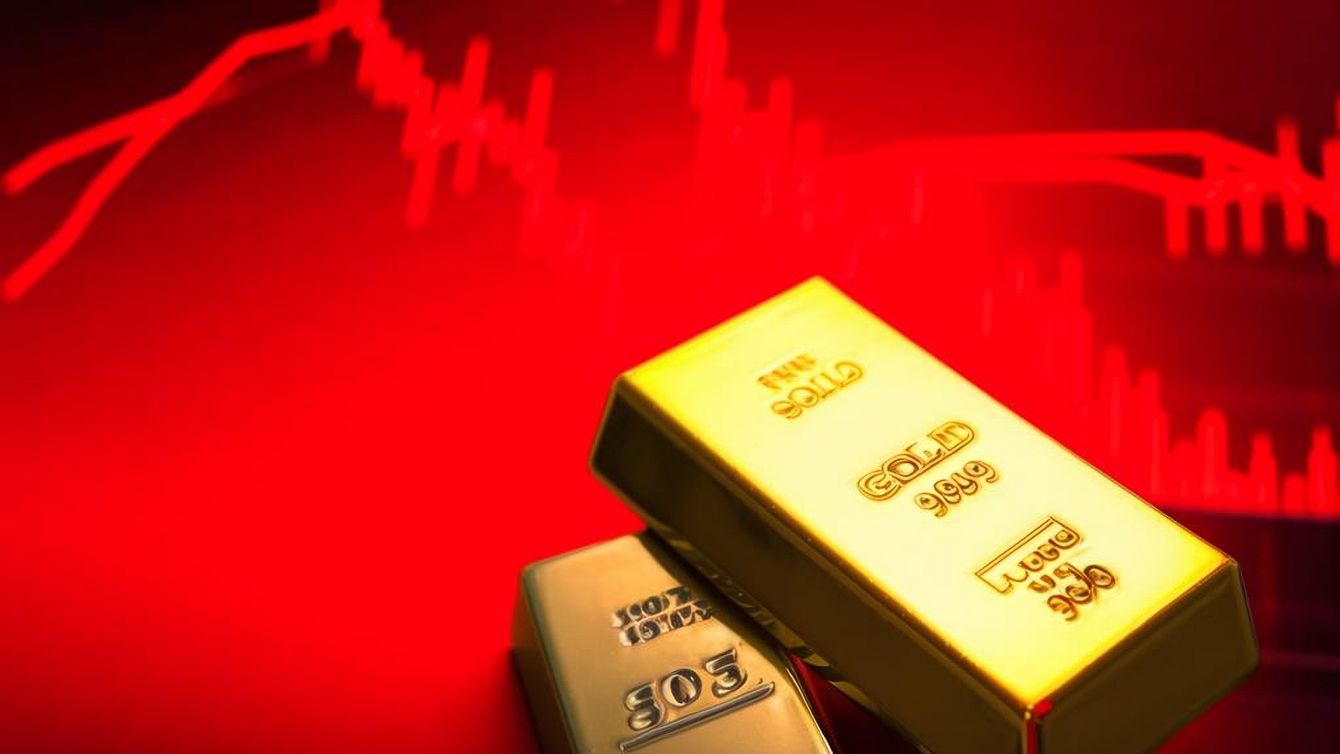
Gold “Slams” 10%: Record $5,600 to $4.7K
Gold suffered its most brutal crash in years on Friday (January 30th), reversing sharply after a “parabolic” rally that had briefly lifted prices to an all-time high. Gold prices plunged more than 10% to fall below $5,000 an ounce—surpassing the intraday drop seen during the 2008 global financial crisis and marking one of the deepest daily declines since the early 1980s.
The sell-off felt like a mass “unwinding.” After prices rose too quickly, extreme volatility triggered a flurry of leveraged positions and profit-taking. At its peak, spot gold fell to around $4,830.65 an ounce at midday in New York—demonstrating the severity of outflows when markets panic and lock in profits.
The main trigger came from the strengthening US dollar, following news—later confirmed—that the Trump administration was preparing Kevin Warsh as the next Fed chairman. A stronger dollar is typically gold's "natural enemy," making it more expensive for global buyers. Sentiment also reversed because some investors had previously bought gold when Trump signaled no concern about a weakening dollar—when the dollar strengthened, the "safe haven trade" position was immediately shaken.
According to Christopher Wong (OCBC), this movement seemed to prove the classic market myth: quick rise, quick fall. He believes the Warsh news was merely a trigger, while the market had actually been "waiting" for a correction to cancel the already parabolic rally. In other words, the trigger was there, but the "fuel" had already accumulated from the previous euphoria.
On the market mechanism side, pressure is also expected to be amplified by derivatives dynamics. Goldman Sachs highlighted a record-breaking wave of call option buying—which mechanically encouraged option sellers to hedge by buying, thus amplifying the rally. When prices reverse, the effect can be like a spring: dealers adjust their hedges aggressively, accelerating the decline through a phenomenon often called a gamma squeeze. In large gold ETFs like SPDR Gold Shares, options positions that expire at certain levels also increase the sensitivity of the movement.
Despite the severe "slam," gold still rose around 18% throughout January, approaching its sharpest monthly gain since 1980—signaling that the previous rally was indeed exceptionally large. However, technical indicators have long been warning signs: gold's RSI briefly touched 90, a super-overbought level rarely seen in decades. With extreme volatility and repeated breaches of the psychological $5,000 level, the market is now bracing for the next phase: the turmoil may not be over yet.
Source: Newsmaker.id