US Fleet Arrives, Iran a Target?
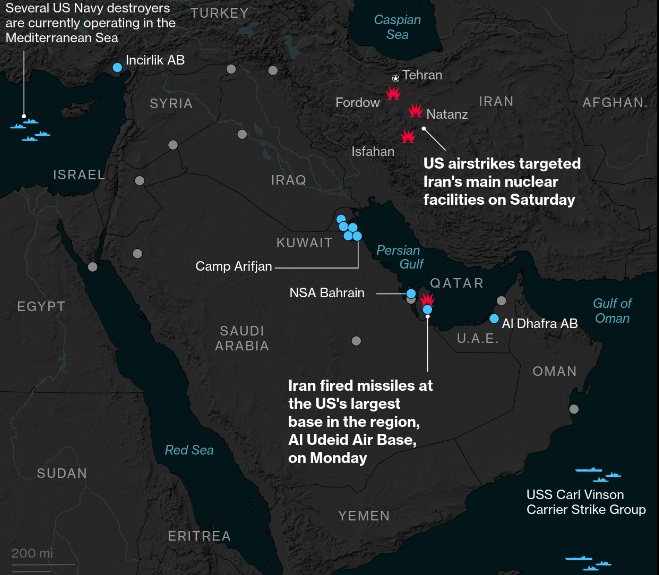
The arrival of the USS Abraham Lincoln carrier strike group in the Middle East makes President Donald Trump's options for attacking Iran more "tough" and more numerous. But at the same time, the mission's objectives remain unclear: Trump sometimes talks about demanding a "no-nuclear" Iran, sometimes highlights the repression of protesters, leading many to question which targets the US is actually pursuing.
This situation is high-stakes because Iran has threatened retaliation if US bases or installations in the region are attacked. Fears of escalation have contributed to a sharp rise in oil prices this week—Brent briefly reached around US$70 per barrel, although this eased after Trump said he was in communication with Iran and hoped talks would continue.
From a military perspective, this fleet gives the US the ability to strike without relying too heavily on other countries' permission—important because some Gulf states reportedly don't want their airspace used to avoid being targeted in retaliation. However, analysts believe that for a truly large-scale attack, more additional forces are usually needed than just a single aircraft carrier strike group.
The problem is, "bombs alone" won't necessarily resolve the nuclear issue. IAEA Chief Rafael Grossi believes Iran still has the know-how and can re-establish enrichment activities, while international monitoring has not yet returned to normal. In Washington, Secretary of State Marco Rubio emphasized that this deployment is defensive in nature (to protect US troops), further emphasizing that tensions are rising, but the ultimate outcome remains unclear. (asd)
Source: Newsmaker.id