2026 Outlook: 4 Assets, 1 Big Question—Risk On or Risk Off?
The direction of global financial markets in 2026 is expected to be determined by a combination of slowing economic growth, a downward trend in interest rates, and geopolitical and trade uncertainty. The International Monetary Fund (IMF) projects global economic growth of 3.1% in 2026, a slight decrease from 2025, indicating the economy will remain expansive but not as strong as the previous recovery phase.
In the United States, the monetary policy path has again become the primary compass for the valuation of risk assets and commodities. The FOMC projection materials as of December 10, 2025, show the median projection of the policy interest rate (federal funds rate) at around 3.4% at the end of 2026, reinforcing market assumptions that the easing phase is likely to continue if inflation continues to subside.
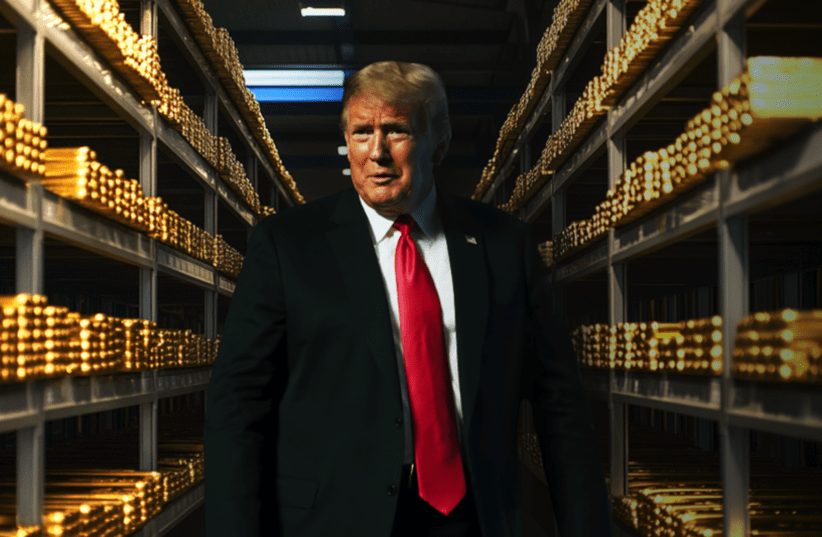
Gold: A "safe haven" that still has potential
Gold enters 2026 with relatively solid fundamentals: interest rates have the potential to fall, the dollar is likely to weaken, and demand for hedging remains strong amid geopolitical risks and trade fragmentation. At the end of 2025, gold prices again reached a record high, driven by expectations of interest rate cuts and demand for safe havens.
The World Gold Council (WGC) assesses that 2026 has the potential to be a year of "surprises": in a scenario of slowing growth and further interest rate declines, gold could record a moderate increase; while in a scenario of a sharper slowdown accompanied by rising global risks, gold has the potential to perform stronger.
However, after the strong rally in 2025, market participants will also be closely monitoring whether the 2026 rally will continue smoothly or enter a consolidation phase. Key factors being monitored include the direction of real yields, dollar dynamics, and the sustainability of demand from institutional investors and central banks.
Silver: The dual thrust of industry and investment
If gold is "insurance" against uncertainty, silver possesses dual characteristics: a precious metal and an industrial metal. 2025 will be a period of sharp silver surge, with prices breaking new records in late December, amidst narratives of a supply deficit and rising industrial demand.
One reason silver remains attractive heading into 2026 is its relatively rigid supply structure. Much silver production comes from the mining of other metals as a byproduct, so rising silver prices do not automatically lead to rapid increases in supply. On the demand side, silver's role in the technology supply chain—including electronics and energy—makes it sensitive to industrial cycles. Some market participants also highlight the recurring physical shortage trend in recent years as a price support.
However, silver's volatility has historically been higher than that of gold. In 2026, silver has the potential to be the most explosive in a scenario of falling interest rates and improving global manufacturing activity; conversely, it could quickly correct if risk sentiment changes suddenly.
Oil: The shadow of oversupply versus the risk of supply disruptions
The oil outlook for 2026 is expected to be determined more by the fundamentals of the supply-demand balance than simply geopolitical headlines. The International Energy Agency (IEA) stated in its December 2025 report that global oil supply remains on an upward path, with a projected supply increase of around 2.4 million barrels per day in 2026.
Supply increases faster than demand growth open up space for a surplus narrative, which typically depresses prices and makes oil rallies difficult to sustain without additional production cuts. However, the market also assesses that risks remain asymmetric: disruptions to strategic logistics routes, sanctions, or conflicts that severely impact physical supplies could trigger sudden price spikes—though often temporary if global supplies remain plentiful.
Global stocks: The “trifecta” of 2026—interest rates, earnings, and AI
For the stock market, 2026 is projected to be a year determined by the cost of money (rate cuts), the strength of corporate earnings, and AI spending. Reuters reports that maintaining the rally momentum into 2026 will depend heavily on a combination of AI optimism, strong earnings, and a moderately dovish Federal Reserve—but still overshadowed by factors such as tariffs and US political dynamics.
Strategic surveys and major brokerage targets also tend to predict that major stock indices could still rise until the end of 2026, although many believe it will be difficult to repeat the very strong performance of the previous year—with the risk of a correction remaining open at some point in the year.
On the other hand, international institutions warn that the resilience of global growth could be tested by tariff policies and trade uncertainty—factors that could widen volatility and trigger sector rotation (from growth to defensive, or vice versa) depending on the direction of economic data.
What will the market be most closely monitoring in early 2026?
Market participants will generally be awaiting confirmation from three data clusters:
US inflation and employment (determining how quickly interest rate cuts will continue).
Industrial data and precious metal investment flows (testing whether the gold-silver rally is merely euphoric or fundamentally supported).
Oil production policy and supply realization (whether a surplus is actually occurring or is being dampened by cuts or geopolitical risks).
Source : Newsmaker.id