
Trending
Hangseng
Source: Newsmaker.id
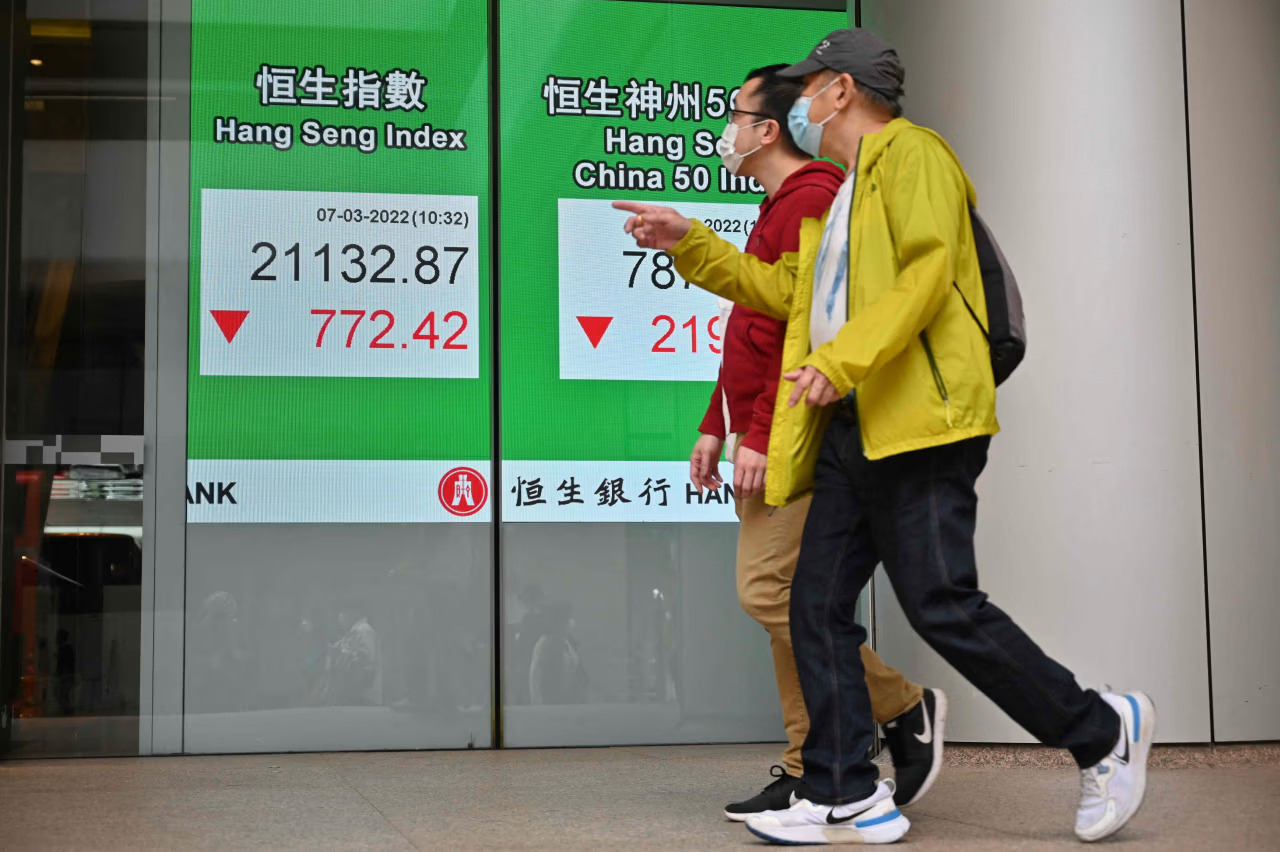
The Hang Seng Index weakened during Thursday's trading (Sept 17), falling approximately 1.4%—or nearly 330 points—to the 24,380 level. This downward pressure followed the Federal Reserve's decision to raise interest rates by 25 basis points and signal that monetary tightening could continue through the end of the year. The policy move pushed the US dollar and Treasury yields higher, heightening investor caution regarding interest-rate-sensitive Hong Kong stocks.
The Federal Open Market Committee raised the Federal Funds Rate to a range of 3.75%–4.00%, marking the first hike in over three years. Recent projections indicate that the majority of Fed officials still anticipate one additional hike this year, given persistent inflationary pressures. These conditions have raised concerns that global liquidity could tighten further if the rate-hike cycle persists.
In tandem with the Fed's policy, the Hong Kong Monetary Authority (HKMA) raised its base rate by 25 basis points to 4.25%. This move was necessitated by the Hong Kong dollar's peg to the US dollar, causing Hong Kong's monetary policy to generally track US interest rate changes. Rising borrowing costs could exert additional pressure on the property sector and interest-rate-sensitive companies.
CICC assesses that US monetary policy tightening could increase volatility in Hong Kong stocks in the short term. However, the impact is expected to be relatively limited provided the Fed's rate hikes do not evolve into a prolonged tightening cycle. Investors will now closely monitor the direction of Fed policy and liquidity trends in the Hong Kong market.
Regarding stock performance, Tencent fell by approximately 1.4%, Xiaomi weakened by 1.2%, and AIA lost about 0.6%. Conversely, some stocks managed to post gains, including Z.AI Co. (up ~4.2%), Kingboard Laminates (up 4.9%), and Lenovo (up ~1.9%). Meanwhile, the drop in oil prices following prospects for the restoration of Saudi Arabia's East-West pipeline has helped slightly alleviate concerns regarding energy-driven inflation.
Newsmaker Analysis: Current pressure on the Hang Seng stems primarily from a combination of Federal Reserve interest rate hikes, a strengthening dollar, and rising funding costs in Hong Kong. As long as the market anticipates further rate hikes in the US, index volatility is likely to remain high. However, falling oil prices and positive sentiment within certain technology sectors could help curb this pressure. The Hang Seng's future direction will depend heavily on expectations regarding Fed policy, liquidity conditions in Hong Kong, and economic developments in China. (asd)