
Trending
US Dollar
Source: Newsmaker.id
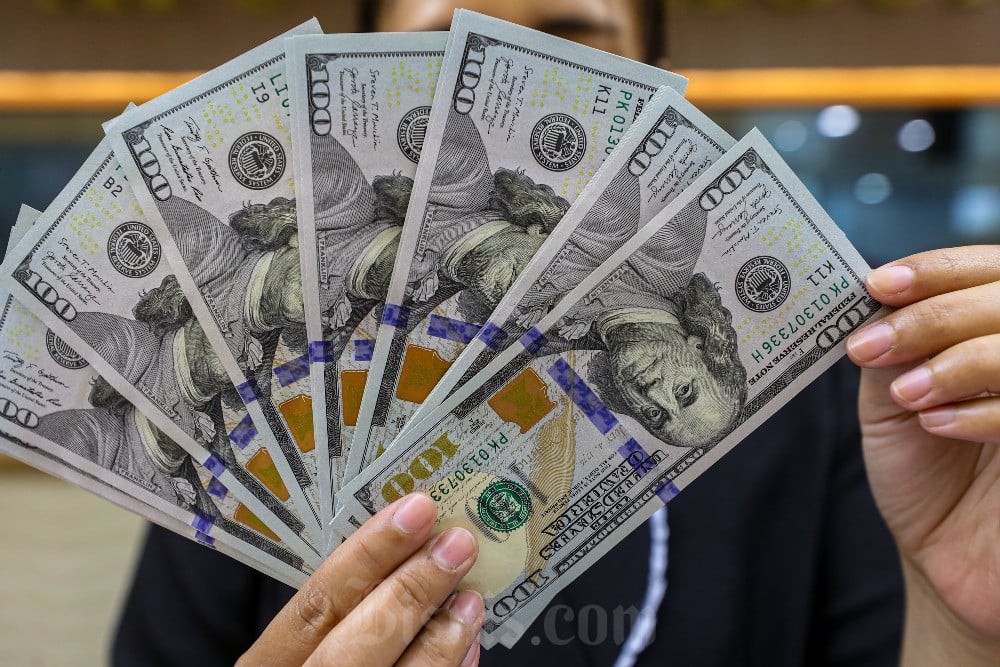
The US Dollar Index (DXY) strengthened once more, approaching the 102 level during trading on Monday (October 19, 2026), following pressure experienced late last week. This gain was primarily triggered by a weakening euro, fueled by rising political tensions and demonstrations—some escalating into riots—in France and several other European nations. Such conditions have prompted investors to exercise greater caution regarding European currencies, leading them to turn back toward the US dollar as a "safe-haven" asset amidst global uncertainty.
Beyond the political unrest in Europe, the intensifying conflict between Russia and Ukraine has also exerted pressure on the euro. The ongoing tensions have raised concerns regarding the region's economic stability, particularly concerning energy security and trade activity. Given that the euro carries the largest weight in the calculation of the US Dollar Index, its weakness tends to drive the DXY higher, even though economic conditions within the United States itself have not undergone any significant shifts.
Meanwhile, the unresolved conflict in the Middle East remains a focal point for the market. Fighting between Saudi Arabia and the Iranian-backed Houthi group in Yemen continues, while attacks on oil tankers near the Strait of Hormuz have heightened the risk of disruptions to global oil distribution. This situation has bolstered demand for the US dollar as a safe-haven asset, while simultaneously fueling concerns that rising energy prices could exacerbate global inflation.
Regarding monetary policy, investor attention remains fixed on the Federal Reserve’s (The Fed) interest rate trajectory. Last Friday, Fed Chair Kevin Warsh opted not to provide any signals regarding potential interest rate decisions for the upcoming October 27–28 meeting. Warsh also noted that US inflation data, which came in higher than anticipated, has not altered his assessment of the broader economic landscape. This statement initially exerted downward pressure on the US dollar, as the market scaled back expectations for an imminent interest rate hike. Currently, market participants estimate an approximately 84% probability that the Fed will maintain interest rates at their current levels during the October meeting. Looking ahead, the movement of the US dollar is expected to remain influenced by developments in geopolitical conflicts, economic conditions in Europe, and expectations regarding Federal Reserve policy. With the US central bank now in a "blackout period"—a time when Fed officials limit public communication about monetary policy in the lead-up to a meeting—investors will rely more heavily on economic data and bond market movements to gauge the direction of interest rates. Should global uncertainty continue to rise, the US dollar could potentially maintain its strength, hovering around the 102 level. This scenario may exert pressure on gold and other currencies, although growing demand for safe-haven assets could also help support the price of gold amidst geopolitical risks.