Dollar Falters, Swiss Franc Takes the Lead
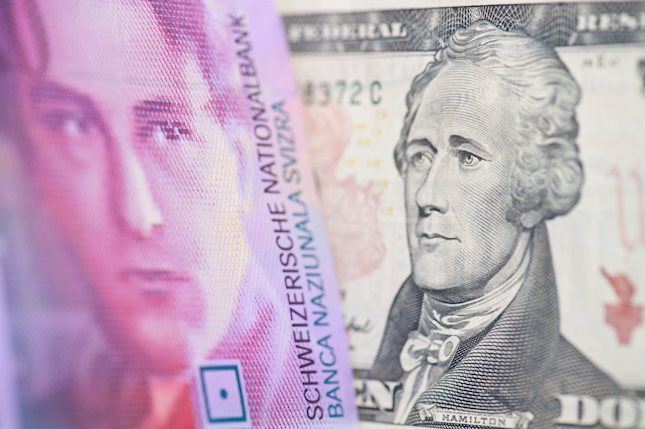
The Swiss Franc strengthened against the US dollar during Wednesday's trading (August 5). The USD/CHF pair fell approximately 0.18% to the 0.8078 level, as weak US labor data once again weighed on the dollar. However, the pair's movement remained limited as the market awaited Friday's Non-Farm Payrolls (NFP) report.
ADP data showed that US private companies added only 44,000 jobs in July—well below the forecast of 70,000 and a slowdown from June's 98,000. Meanwhile, the ISM Services PMI rose slightly to 54.1 but remained below the expected 54.5. The employment component fell into contraction territory, further indicating that hiring momentum is weakening.
Dollar sentiment was also pressured by a drop in oil prices after Iran and Oman reached an understanding regarding shipping lane coordinates in the Strait of Hormuz. While a joint statement is in the final stages of drafting, the agreement does not automatically result in the immediate opening of the Strait, as security issues and US requirements remain unresolved.
In Switzerland, annual inflation dipped from 0.5% to 0.4% in July, remaining near the lower bound of the Swiss National Bank's (SNB) 0%–2% price stability range. This reinforces expectations that the SNB will maintain interest rates at 0%; consequently, the franc's current support stems more from dollar weakness and its status as a safe-haven asset than from expectations of SNB policy tightening.
Newsmaker Analysis: USD/CHF retains a bearish bias as long as it remains capped below the 0.8100–0.8120 range. A drop below 0.8050 could pave the way toward the 0.8020–0.8000 levels. Conversely, strong NFP data or the failure of the Hormuz agreement could lift the dollar and push the pair back toward the 0.8100–0.8150 range. Weak NFP data could potentially strengthen the franc, but low Swiss inflation may limit its appreciation. (arl)
Source: Newsmaker.id