Dollar Struggles to Rebound as Fragile U.S.-Iran Ceasefire Keeps Markets Wary
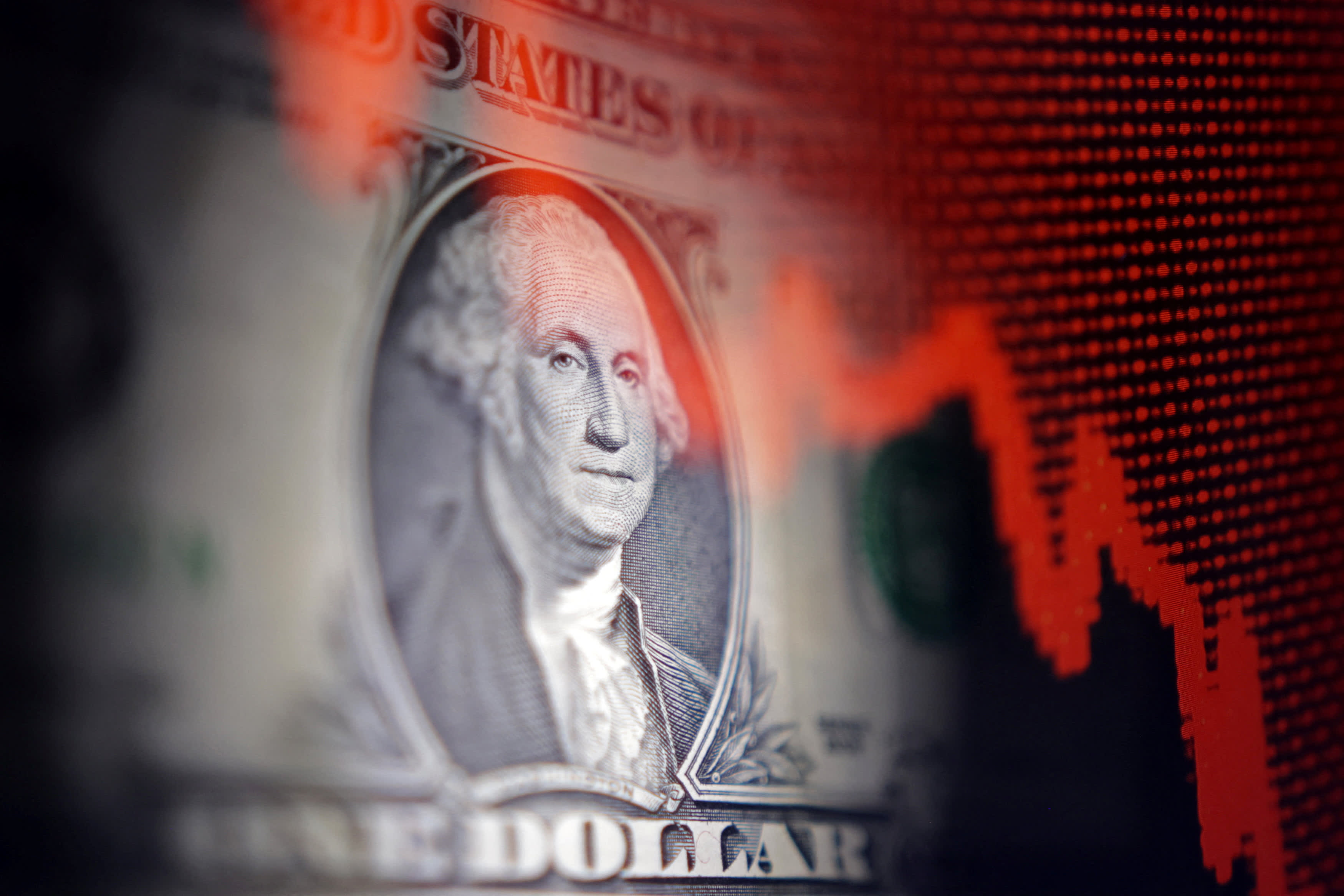
A fragile calm held across currency markets on Thursday as traders kept their focus on whether the ceasefire between the United States and Iran would hold, a day after its announcement sent the dollar broadly lower and put it on track for its worst week since the conflict began in late February.
The truce appeared shaky. Israel struck more targets in Lebanon, and there was still no sign Iran had lifted its blockade of the Strait of Hormuz — a disruption that has triggered the biggest shock to global energy supplies on record.
Iranian negotiators were expected to travel later Thursday to Pakistan for the first peace talks of the war, but Tehran said there would be no deal as long as Israel continues to hit Lebanon.
Israeli Prime Minister Benjamin Netanyahu said he is seeking direct talks with Beirut, with a “focus on disarming Hezbollah and establishing peaceful relations between Israel and Lebanon.” President Donald Trump said all U.S. ships, aircraft and military personnel would remain in place in and around Iran until Tehran fully complies with the agreement.
Euro, sterling firm
The euro rose 0.3% to $1.1698. It had gained 0.6% on Wednesday before trimming advances late in the session after touching a one-month high of $1.1721. Sterling was up 0.27% at $1.343, after rising 0.77% on Wednesday but pulling back from as high as $1.348.
The yen weakened, with the dollar up 0.27% at 159.02 yen after briefly dipping below 158 on Wednesday.
With Hormuz still closed, “the entire ceasefire remains tenuous,” said Derek Halpenny, head of research, global markets EMEA at MUFG. Still, he noted that while the U.S. dollar has rebounded, “the moves in general have been modest,” with the prospect of talks in Pakistan helping to limit a full reversal of Wednesday’s swing.
Data focus
New U.S. personal spending data released Thursday showed inflation rose as expected in February and likely climbed further in March amid the Iran war — a trend seen discouraging the Federal Reserve from cutting rates in the near term. The Personal Consumption Expenditures (PCE) price index rose 0.4% after an unrevised 0.3% increase in January, the Commerce Department’s Bureau of Economic Analysis said.
In Japan, consumer confidence worsened in March for the first time in three months, adding to recent signs of a potential economic hit from the Middle East conflict that could complicate the Bank of Japan’s rate-hike decision. The yen showed little immediate reaction. BOJ Governor Kazuo Ueda said in parliament that real interest rates remain clearly negative, keeping financial conditions accommodative.
The Australian dollar rose 0.49% to $0.7078 and the New Zealand dollar gained 0.57% to $0.5855. In cryptocurrencies, bitcoin was last up 0.79% at $71,942.
Source : Newsmaker.id