RBA’s Bullock Is Coy on May After Pausing Ahead of Trump Tariffs
Australia’s central bank kept its key interest rate unchanged, with Governor Michele Bullock unwilling to provide guidance on the May policy meeting as the board awaits more evidence that inflation is moving sustainably back to target in a world of mounting uncertainty.
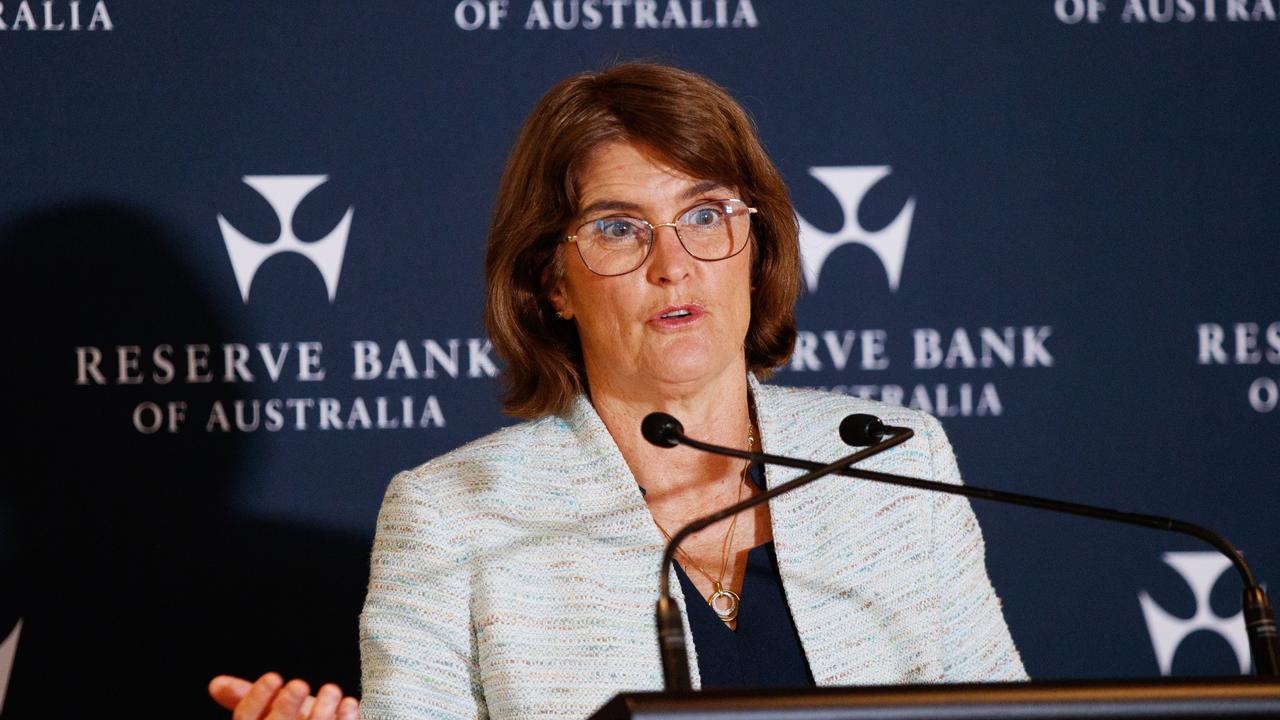
The Reserve Bank’s board held its cash rate at 4.1% on Tuesday, as expected a day before President Donald’s Trump’s “Liberation Day,” when he intends to impose tariffs on a number of countries. Bullock told reporters that the new monetary policy board “did not explicitly discuss a rate cut,” adding it did review global downside risks and standing pat was a consensus decision.
Forward looking indicators suggest “the labor market is still tight,” she said at a press conference in Sydney. The board is “alert to the possibility” that low unemployment “might put wages under upward pressure” and fuel inflation.
The Australian dollar extended its gain while the yield on policy sensitive three-year notes rose one basis point to 3.71%, erasing an earlier loss as Bullock pushed back on expectations for rate cuts. Traders are pricing a roughly 72% chance the RBA will ease at its May 19-20 meeting, down from about 80% prior to the decision.
“The board is going out of its way not to provide any forward guidance,” said Gareth Aird, head of Australia Economics at the Commonwealth Bank of Australia. “It will be up to the economic data and potential developments in the global economy that will feed into future monetary policy decisions.”
Uncertainty surrounding Trump’s tariff plans, which have often changed and been subject to last-minute carveouts, have triggered fears they will disrupt supply chains and raise prices. Even if Australia avoids a direct impact, as a small, open economy it’s heavily geared to global activity and sentiment and likely to see some fallout.
Bullock reiterated that tariffs aren’t having an impact on prices just yet, saying the important thing for Australia will be the impact on key trading partners like China. She added that the exchange rate may also prove to be a buffer if there’s an effect on commodity prices.
“So the actual outcomes, our scenario suggests, that provided China leans in on this and gives fiscal stimulus then we will see an impact on our GDP growth but it won’t be as dramatic as for some of the countries that are caught up much more directly,” she said.
Trump’s program has added uncertainty to an already clouded global outlook. Federal Reserve officials have warned that tariffs may be a roadblock to recent progress on inflation.
Bullock was asked if the RBA would prioritize price stability or growth if tariffs lift prices and weaken the economy, a combination that was seen in the 1970s and is known as stagflation. Inflation is the “number one thing” you have to keep in control, she said, while keeping an eye on employment.
Domestically, data has been mixed — monthly figures showed Australia lost more than 50,000 jobs in February and an inflation indicator is now within the RBA’s 2-3% target. At the same time, consumer spending has picked up from last year’s lows and nationwide housing prices hit a record high in March.
The governor noted that when the RBA’s board meets in May, the impact from tariffs will likely be clearer, it will have seen quarterly inflation data — the most comprehensive reading — and it will have updated staff forecasts.
Australia is in the middle of a tight election ahead of a vote on May 3. Based on current polling, the most likely result is a hung parliament in which neither of the two major parties holds a majority. In such a case, they would need to negotiate with independent lawmakers to form government.
Bullock said the fact that an election campaign is underway did not factor into the board’s thinking to leave rates unchanged. Asked about pressure from Treasurer Jim Chalmers to cut rates, Bullock said the board didn’t face any “particular political pressure.”
The RBA will publish its semi-annual Financial Stability Review on Thursday. The following week, on April 10, the governor will deliver a rare speech at an event for Chief Executive Women in Melbourne.
Source: Bloomberg