Powell Says “We Just Don’t Know” How the Oil Shock Will Hit Inflation and the U.S. Economy
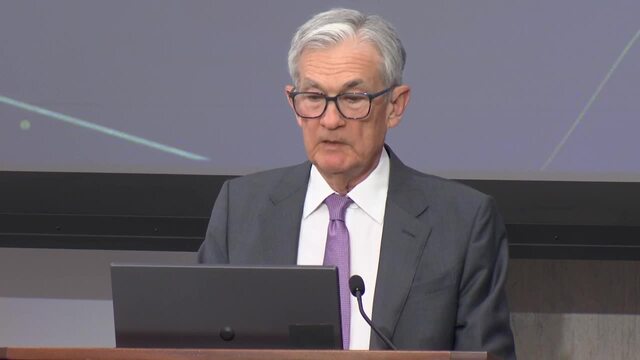
Federal Reserve Chair Jerome Powell said on Wednesday that policymakers “just don’t know” how the surge in oil prices driven by the ongoing Middle East conflict will ultimately affect inflation or the U.S. economy. Powell’s remarks came after the Fed held interest rates steady as widely expected.
Following the decision, the Fed’s updated dot plot continued to show expectations for one rate cut this year, even as officials raised their forecast for core PCE inflation. “The implications of events in the Middle East for the U.S. economy are uncertain,” Powell told reporters. “In the near term, higher energy prices will push up overall inflation, but it is too soon to know the scope and duration of the potential effects on the economy.”
As anticipated, the Federal Open Market Committee (FOMC) kept the federal funds rate unchanged at 3.50%–3.75% for a second consecutive meeting, after cutting the policy rate by a total of 75 basis points toward the end of last year.
In its updated Summary of Economic Projections (SEP), the Fed maintained its view of at least one cut this year and one in 2027, while lifting the 2026 core PCE inflation forecast to 2.7% year over year, up from 2.5% in December. Powell said surging oil prices were “going to be a part” of the higher inflation forecast. “The oil shock for sure shows up, some of that will be in core as well,” he said, adding that the revised projections also reflect “low progress on tariffs.”
Powell repeatedly underscored uncertainty. “We just don’t know,” he said, highlighting the difficulty of judging whether the energy shock will be temporary or more persistent—at a time when inflation remains above the Fed’s target and the labor market is sending mixed signals.
The Iran war has added a new complication for monetary policymakers, with Brent crude surging sharply since the fighting began at the end of February and U.S. gasoline prices climbing to their highest levels since October 2023. In its policy statement, the FOMC said economic activity has been expanding at a solid pace, job gains have remained low, the unemployment rate has been little changed in recent months, and inflation remains somewhat elevated. The committee added that uncertainty around the outlook is still high, and it remains attentive to risks on both sides of its dual mandate.
Source : Newsmaker.id