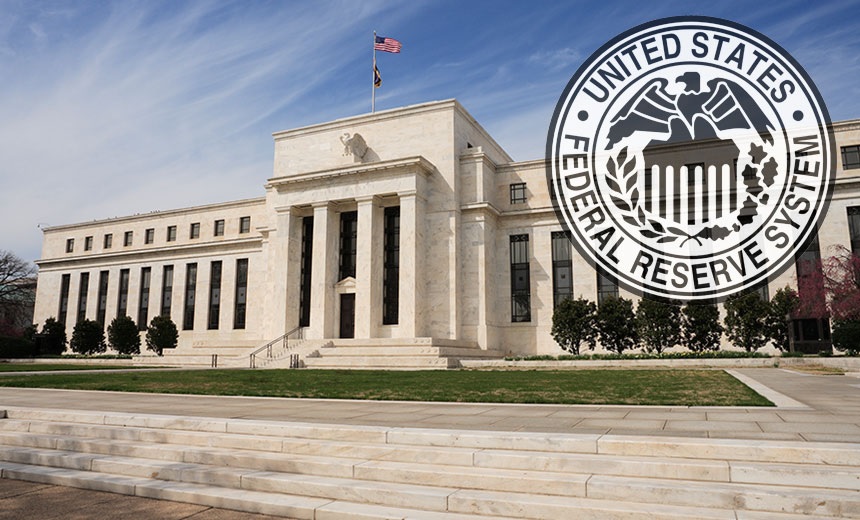
Understanding the Core PCE Index: The Federal Reserve’s Preferred Inflation Gauge
In the world of economics and global financial markets, inflation data is one of the most closely watched indicators by investors, traders, businesses, and policymakers. Among the various inflation measures released in the United States, the Core Personal Consumption Expenditures (Core PCE) Price Index stands out as one of the most influential. While it may not be as widely recognized as the Consumer Price Index (CPI), Core PCE is the inflation gauge most closely monitored by the Federal Reserve (Fed) when making interest rate decisions.
The Core PCE Index measures changes in the prices of goods and services purchased by consumers in the United States, excluding food and energy. These two categories are removed because they tend to be highly volatile and are often influenced by temporary factors such as weather conditions, geopolitical tensions, and fluctuations in commodity prices. By excluding these components, Core PCE provides a clearer picture of underlying inflation trends within the economy.
The data is published monthly by the Bureau of Economic Analysis (BEA), an agency under the U.S. Department of Commerce. Core PCE plays a central role in the Federal Reserve’s assessment of whether inflation is moving toward its long-term target of approximately 2%. As a result, every Core PCE release attracts significant attention from financial markets around the world.
Many people often compare Core PCE with the Consumer Price Index (CPI) because both are measures of inflation. However, there are important differences between the two indicators. CPI, published by the Bureau of Labor Statistics (BLS), focuses on the prices consumers pay directly for a fixed basket of goods and services. In contrast, PCE has a broader scope because it also accounts for expenditures made on behalf of consumers, such as healthcare services paid for by employers or government programs.
Another key difference lies in their weighting methodology. CPI uses relatively fixed expenditure weights, whereas PCE employs a more flexible approach that adapts to changes in consumer behavior. For example, if beef prices rise sharply and consumers switch to chicken as a cheaper alternative, this substitution effect is reflected more quickly in PCE than in CPI. As a result, PCE often reports slightly lower and more stable inflation readings than CPI.
The importance of Core PCE stems largely from its role as the Federal Reserve’s preferred inflation measure. When Core PCE remains elevated or accelerates, policymakers may decide to keep interest rates higher for longer or even raise rates further to contain inflation. Conversely, if Core PCE shows a sustained slowdown and moves closer to the Fed’s target, expectations for interest rate cuts tend to increase.
This relationship between Core PCE and monetary policy makes the indicator highly influential across financial markets. In the foreign exchange market, a stronger-than-expected Core PCE reading often supports the U.S. dollar because investors anticipate tighter monetary policy. On the other hand, weaker inflation data can pressure the dollar by increasing expectations of future rate cuts.
The gold market is also highly sensitive to Core PCE releases. Since gold does not generate interest income, it generally becomes less attractive when interest rates remain high. Therefore, a stronger Core PCE report often weighs on gold prices by reinforcing expectations of restrictive monetary policy. Conversely, softer inflation data may provide support for gold by increasing the likelihood of lower interest rates in the future.
Equity markets closely monitor Core PCE as well. Moderating inflation is generally viewed as positive for stocks because it reduces pressure on the Federal Reserve to maintain restrictive policies. Lower borrowing costs and improved economic growth prospects can help boost investor sentiment and support major U.S. stock indices.
For traders and investors, understanding Core PCE involves more than simply analyzing the inflation figure itself. The real significance lies in how the data shapes expectations regarding future Federal Reserve policy. In many cases, major movements in gold, the U.S. dollar, Treasury yields, and stock markets occur not because of the inflation number alone, but because of the market’s changing outlook for interest rates following the release.
Overall, the Core PCE Index is one of the most important economic indicators in the world because it serves as the Federal Reserve’s primary benchmark for assessing inflation. While CPI may receive more public attention, Core PCE often carries greater weight in monetary policy decisions. For this reason, every Core PCE release is closely watched by market participants seeking insight into the future direction of interest rates, the U.S. dollar, gold prices, and global financial markets.
Source : Newsmaker.id