Negotiations Under Threat: Here's Where the Market Will Go Next!
The US-Iran talks are scheduled to take place on Saturday, April 11, 2026, in Islamabad, Pakistan, as the first round following a two-week ceasefire agreement. However, as of Friday, April 10, 2026 (Western Indonesian Time), the start time of the talks has not been officially announced by the parties involved; reports simply mention "Saturday" without specifying the time. (Time zone note: Islamabad/CCP is 2 hours behind Western Indonesian Time.)
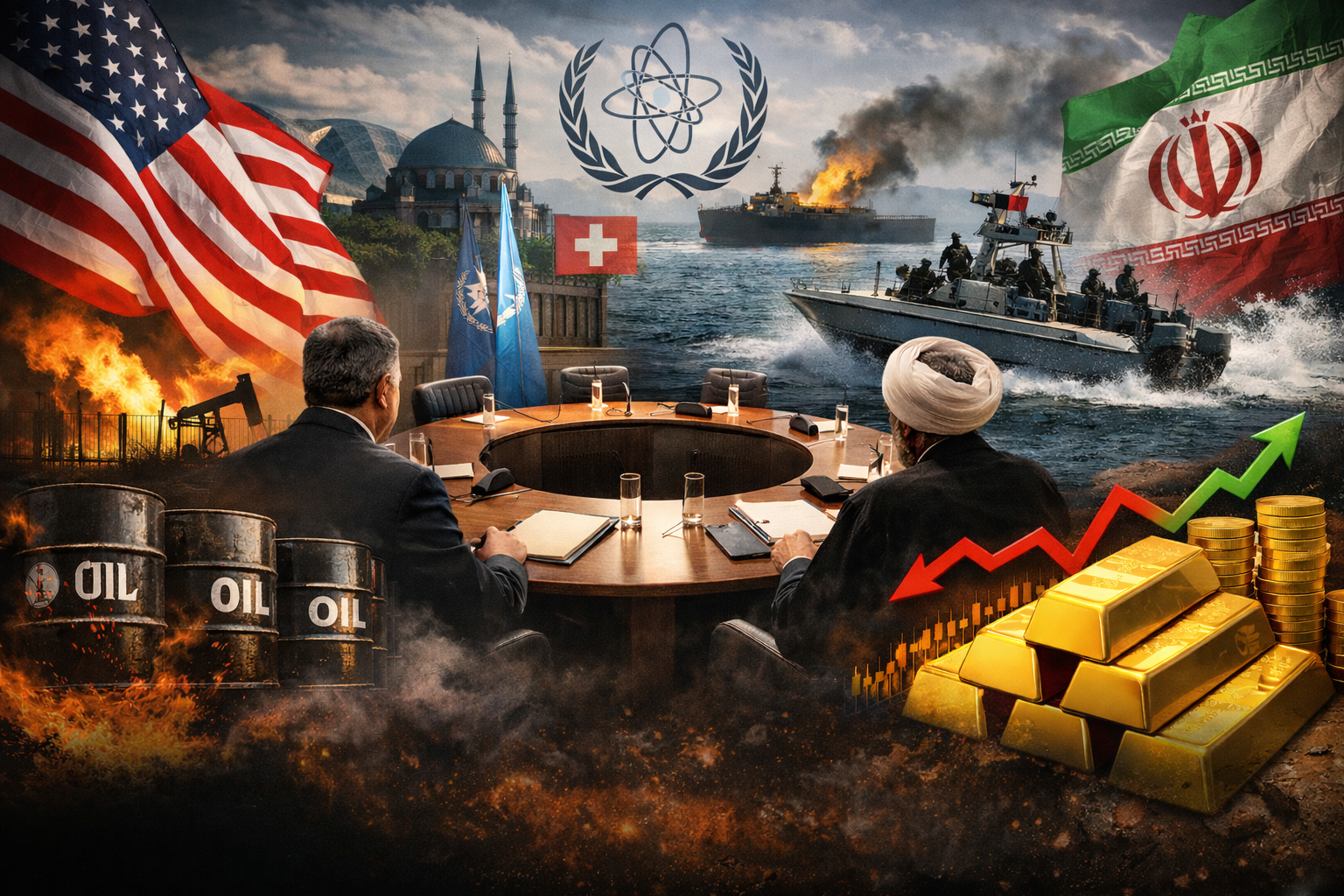
The most pressing agenda items are expected to revolve around access to the Strait of Hormuz and the ceasefire compliance mechanism. Washington accuses Tehran of failing to fulfill its commitments regarding the smooth flow of oil, while initial post-ceasefire data shows that shipping flows are still significantly limited compared to pre-conflict normal conditions. At this point, the talks are likely to test the most "measurable" issues first: how quickly shipping traffic can recover, who will secure the routes, and how to prevent new incidents at sea.
From Iran's side, the underlying positions brought to the negotiating table are based on a previously published 10-point proposal: Iran demands recognition of its nuclear enrichment rights, the lifting of sanctions, and an "end to the war," including targeting Hezbollah in Lebanon. At the same time, the Hormuz issue remains a bargaining chip; separate reports suggest Iran will open the passage in a controlled manner, with a maximum of 15 ships per day. The combination of nuclear demands, sanctions, and the scope of Lebanon makes negotiations potentially lengthy, as they are not simply a matter of "opening or closing" the strait.
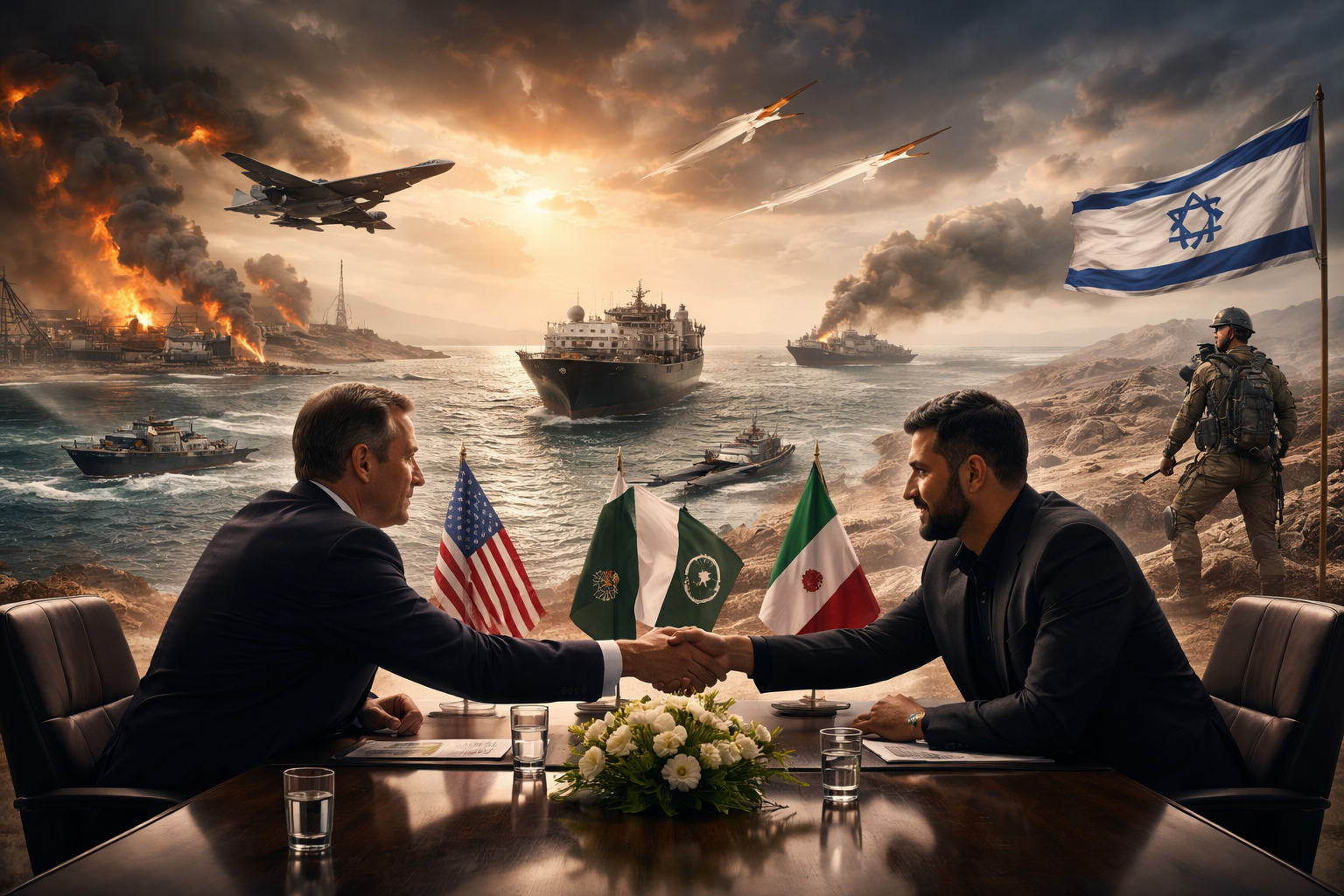
Regarding the actors involved, the US is said to be represented by Vice President JD Vance, while Iran is expected to be led by Parliament Speaker Mohammad Baqer Qalibaf. Pakistan is acting as both host and mediator, with Islamabad's political-military role prominent, as the Pakistani government and military are engaging in intensive diplomacy to keep the process moving. Beyond these three countries, Israel and Lebanon are becoming "disruptive" variables due to differing interpretations: the US and Israel believe the ceasefire excludes Lebanon, while Iran (and Pakistan) argue otherwise.
The most likely baseline scenario is a partial outcome: not a “final agreement,” but rather a package of phased measures that trades off the restoration of Hormuz flows (from a limited opening to an increased quota/safe corridor) for a delay in escalation and the commencement of further technical discussions on nuclear and sanctions issues. The alternative scenario is that negotiations proceed but stall over two highly political issues: (1) whether Lebanon is within the scope of the ceasefire, and (2) whether the US is willing to give space to Iran's demands regarding enrichment and sanctions. The most immediately discernible indicators of the final outcome usually remain Hormuz: changes in the number of ships actually passing through and the stability of incidents in the region.
From Israel's perspective, the signals tend to be “going it alone” in Lebanon: the Israeli government maintains its focus on disarming Hezbollah and encourages direct talks with Beirut, while also emphasizing that operations in Lebanon are not automatically bound by the US-Iran ceasefire framework. If the baseline scenario (a partial outcome and Hormuz becoming more efficient) materializes, oil could potentially lose some of its risk premium and move more calmly, though still volatile. Gold is likely to stabilize to a limited degree as safe-haven demand subsides. Meanwhile, the dollar is at risk of remaining soft as the safe-haven premium diminishes as risk appetite improves. Conversely, if talks stall and Hormuz remains stalled, the risk premium could quickly return to energy, supporting gold and boosting the dollar.
5 Key Points:
- US-Iran talks are scheduled for Saturday, April 11, 2026, in Islamabad, but the official start time has not yet been announced (Islamabad is 2 hours behind Western Indonesian Time).
- The main topics expected to be Hormuz: opening shipping lanes, security mechanisms/ship permits, and steps to restore oil flows.
- Other major issues: the scope of the ceasefire (whether or not it includes Lebanon) and the nuclear-sanctions package Iran is demanding.
- Parties Involved: The US and Iran as the main parties, Pakistan as host/mediator; other countries influencing the dynamics are Israel (via its position in Lebanon) and regional actors related to energy routes.
- The market is waiting for partial results versus a deadlock: a phased agreement is usually reflected in "physical evidence" in Hormuz (number of ships/smoothness), while a stalled negotiation risks reinstating geopolitical premiums. (asd)
Source: Newsmaker.id