Dollar Rises; Yen Recovers on Intervention Comments
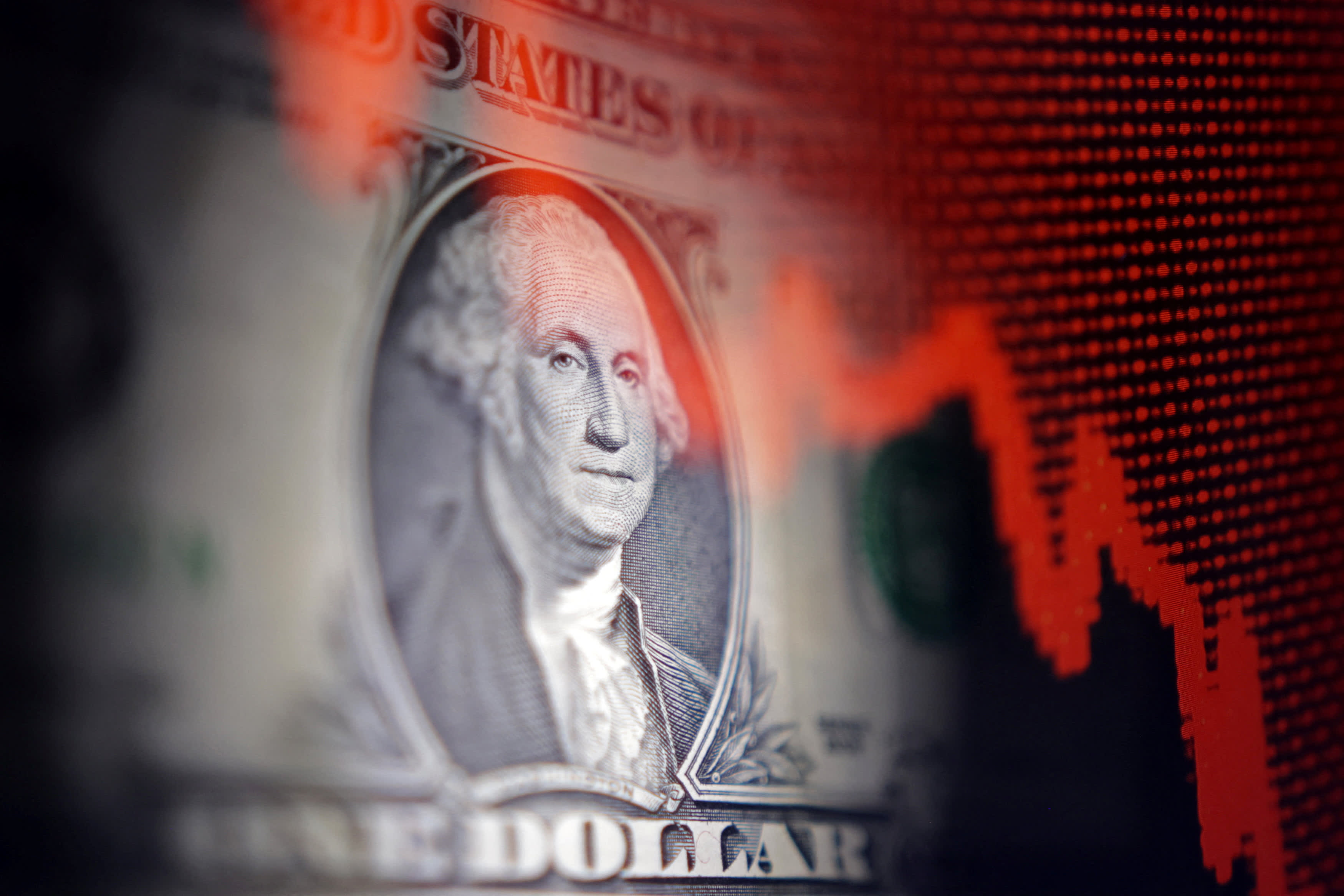
A dollar gauge advanced Monday, bringing this month’s gains to nearly 3%, amid an energy price shock from the conflict in the Middle East. The yen advanced following verbal intervention by Japanese officials.
The Bloomberg Dollar Spot Index rose 0.3% Monday; if the advance holds, the gauge will have its best month since September 2022.
US and Israeli forces pressed ahead with attacks on Iran while the Islamic Republic launched missiles across the Persian Gulf, sending oil prices higher once again amid no sign of an imminent peace deal.
The greenback is supported by month-end and quarter-end flows as well.
“I am looking for one last selloff in EUR/USD and AUD/USD and I will take profit on everything,” said Brent Donnelly, the president of Spectra Markets. “I think we get some USD demand into month-end, but that could be the peak for the USD.”
Federal Reserve Chair Jerome Powell said longer-term inflation expectations appear to be in check.
USD/JPY declined 0.4% to 159.67 after rising to 160.46 earlier in the session, its highest level since July 2024
Japan’s currency chief Atsushi Mimura said the nation may take bold action in the foreign-exchange market if the current situation continues.
“Japan’s FX policy has consistently avoided formulaic rules, preferring discretionary judgment informed by market conditions at the time — a stance that deliberately limits predictability,” wrote Masayuki Nakajima, senior strategist at Mizuho.
EUR/USD fell 0.5% to 1.1457; the euro slipped a fifth day, its longest losing streak since mid-February.
“Although expectations of a more active ECB have recently supported the euro, the interest rate hikes priced into the market appear excessive,” wrote Thu Lan Nguyen, commodity and FX research head at Commerzbank. “As long as the war continues, there is a risk of setbacks for the euro, while once the war ends, the dollar is likely to return to a depreciation path.”
German inflation probably surged to the highest level in more than a year after the Iran war propelled energy costs.
AUD/USD dropped 0.4% to 0.6845, its lowest since January, as risk sentiment deteriorated amid the widening Iran war; the Aussie down for a seventh day for the first time since July 2024 as both onshore and offshore accounts cut longs.
USD/CAD climbed 0.3% to 1.3928.