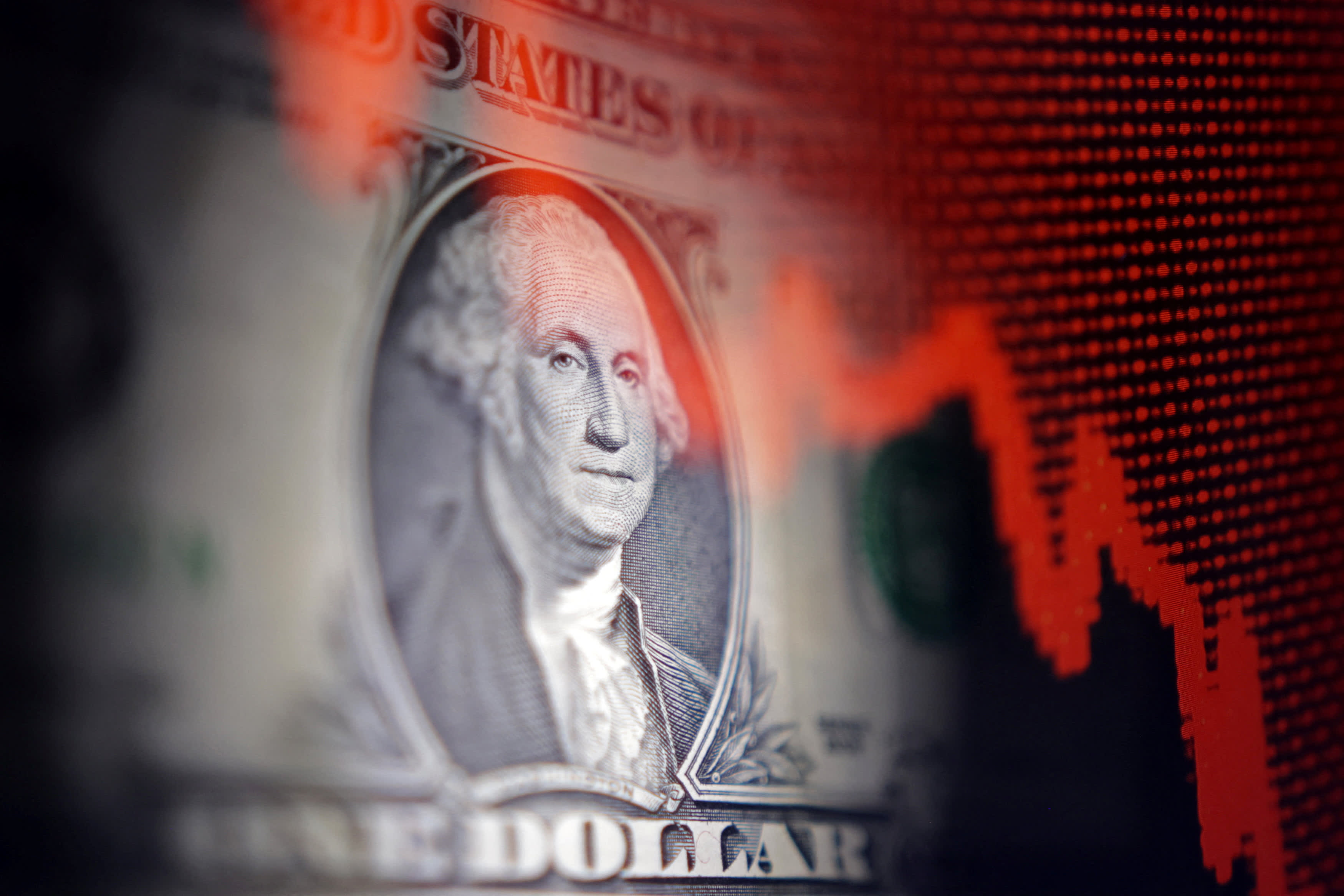
Dollar Slumps as Central Banks Flag Inflation Risks
The U.S. dollar slid after key European central banks highlighted inflation risks, with both the European Central Bank and the Bank of England keeping interest rates unchanged on Thursday. The move marked a sharp reversal after the dollar’s gains in the prior session.
The Bloomberg Dollar Spot Index fell about 0.7%, its biggest drop since Jan. 27. The decline followed Wednesday’s 0.5% rise, which had been driven by hawkish comments from Federal Reserve Chair Jerome Powell and a spike in crude prices.
“The dollar is easing today as stretched positioning gets cleaned up, rather than because the underlying story has changed,” said Mark McCormick, chief FX strategist at BMO Capital Markets. “It’s simply a squeeze as the market mulls the inflation/growth impact.”
In energy markets, Brent crude traded near $105 a barrel, slipping after the U.S. authorized the delivery and sale of Russian oil, easing some supply concerns. In rates, moves were mixed: the 10-year Treasury yield edged down 1 bp to 4.25%, while the 2-year yield rose 3 bps to 3.80%.
The dollar weakened broadly across G-10 FX. USD/JPY fell 1.4% to around 157.60 as the yen surged. Japanese Prime Minister Sanae Takaichi met President Donald Trump in the Oval Office on Thursday, with the two leaders discussing efforts to stabilize energy prices.
In Europe, GBP/USD jumped 1.3% to 1.3427, its biggest rise since November 2023, after the BoE held rates steady. EUR/USD climbed about 1.1% to 1.158, its largest gain since Jan. 27.
In the Asia-Pacific region, AUD/USD rose 0.9% to 0.7083 after data showed Australia’s unemployment rate stayed relatively low in February as job gains continued, reinforcing the Reserve Bank’s view that the economy remains resilient enough to withstand tighter monetary policy. NZD/USD advanced 1.3% to 0.5872.
Source : Newsmaker.id