Gold Under Pressure, Hormuz Stalls and the Fed Increasingly Hawkish
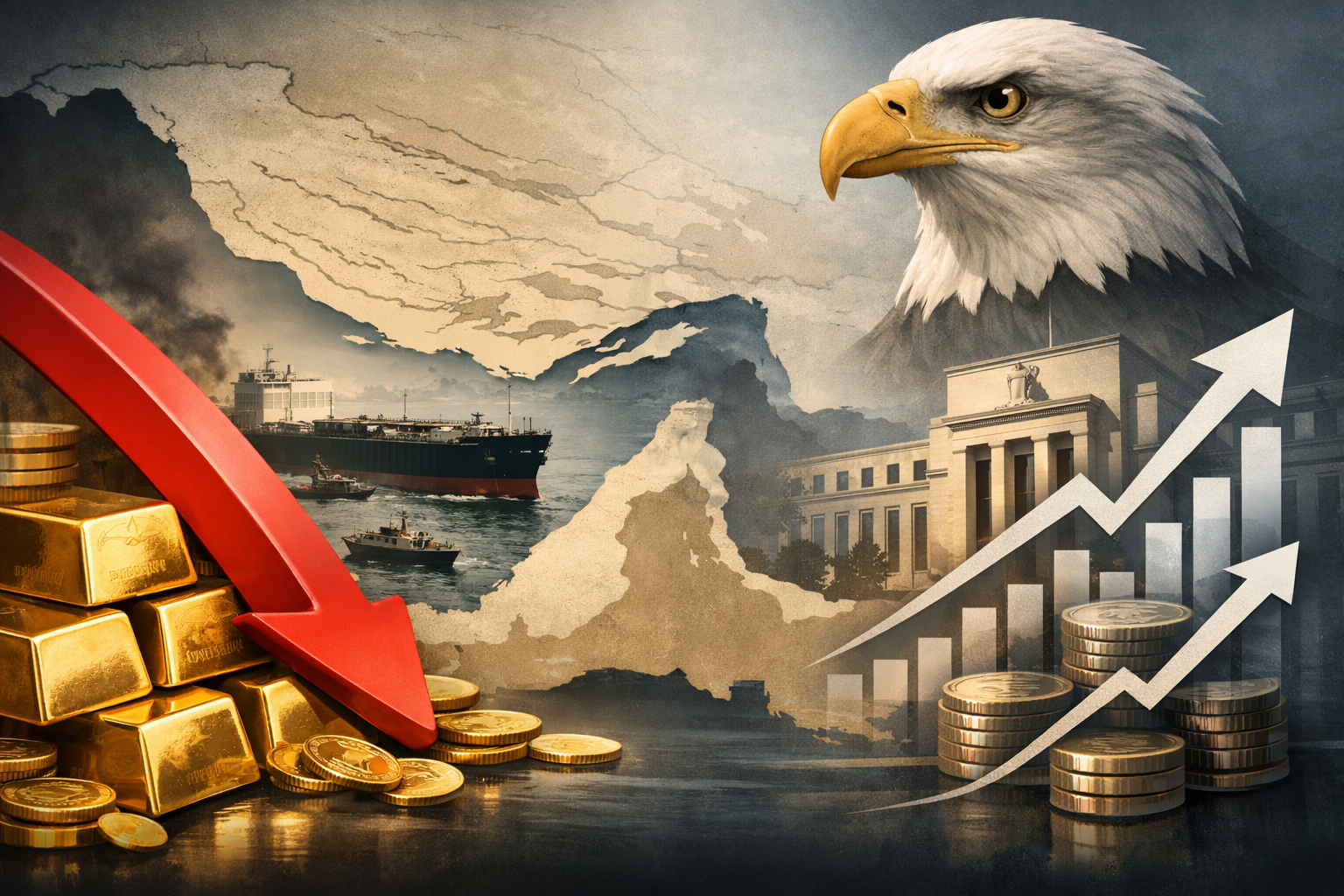
Gold prices fell below US$5,000 per troy ounce on Monday (March 16), extending pressure after two weeks of decline, as the Middle East war entered its third week and markets assessed the inflationary impact of persistently high oil prices. The energy rally reinforced expectations that the Federal Reserve would be more cautious in easing policy, reducing gold's appeal as a non-yielding asset.
Oil fluctuated above US$100 per barrel, while uncertainty about the war's duration made it difficult for market participants to gauge the economic impact. An aide to US President Donald Trump said the conflict could last four to six weeks, amid conflicting signals: Trump said Iran wanted a deal but Washington wanted better terms, while Tehran said it was not seeking talks or a ceasefire.
Over the weekend, the US attacked Iran's main oil export hub, and Tehran continued its attacks on energy infrastructure in various Persian Gulf states. Shipping in the Strait of Hormuz remained nearly halted, adding to supply risks in the waterway that normally carries about a fifth of the world's oil and seaborne liquefied natural gas (LNG). The transmission channel to gold occurs through inflation: higher energy prices increase price pressures, narrowing the scope for interest rate cuts, and increasing the opportunity cost of holding gold.
On the data front, US consumer spending rose only slightly in January, according to data released Friday, while consumer sentiment fell to a three-month low due to concerns about the conflict's impact on gasoline prices. The market now views the chances of a rate cut at this week's Fed meeting as virtually nonexistent.
Despite the restrained upward momentum, gold is still up more than 15% this year. UBS believes gold acts more as a hedge against the economic and monetary impacts of conflict—such as currency weakness, widening deficits, and a slowdown—than the direct threat of war, so the stagflation narrative has the potential to remain supportive in the medium term.
At 9:24 a.m. in London, spot gold fell 0.6% to around US$4,987 per ounce. Silver fell 2.2% to US$78.79, platinum strengthened, and palladium remained relatively stable. The Bloomberg Dollar Index fell 0.2% after rising more than 1% last week.
Source: Newsmaker.id