Markets Wary of US$150–US$200 Scenario, Hormuz Key
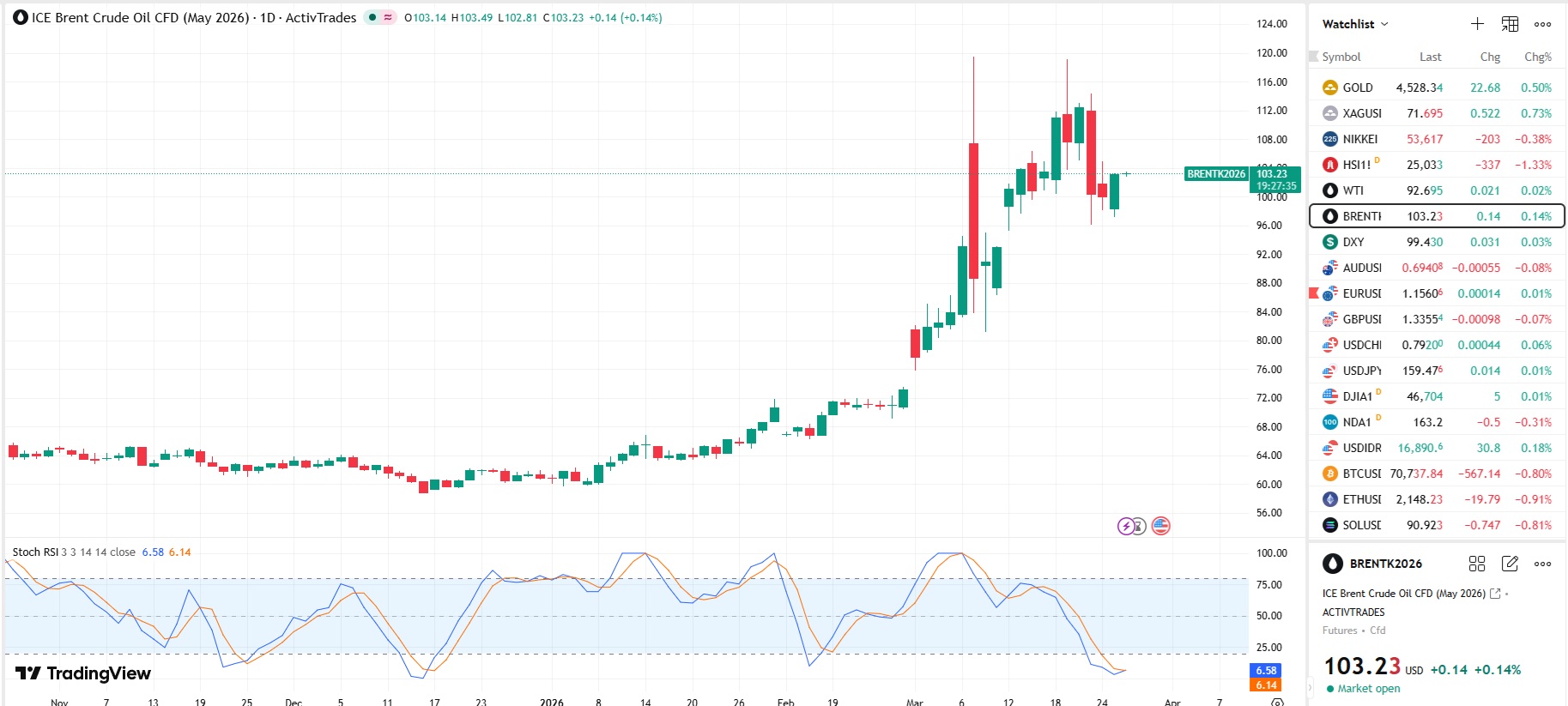
Oil prices rose in Asia as the market assessed conflicting signals from the US and Iran regarding efforts to end the war that has left the Strait of Hormuz virtually closed. Brent returned above US$103/barrel after falling more than 2% on Wednesday, while WTI hovered around US$91. The White House has insisted that peace talks are proceeding, but Tehran has rejected the US approach and put forward its own conditions, including sovereign control over the strategic shipping lane. Additional risk emerged after Iran's parliament drafted a bill to charge a fee in exchange for the "safety" of ships passing through, which it said would be finalized next week.
The conflict pushed Brent to its biggest monthly gain since 1990 and weighed on the global economy—especially Asia—as millions of barrels of daily supply were lost and product prices (diesel, aviation fuel) surged faster than crude. Investors are also considering extreme price scenarios: BlackRock warned that the market could still see oil reach US$150 even if the war is declared over, as supply chain normalization takes time. On the ground, Hormuz traffic remains a trickle, with vessels requesting transit under Iranian protection required to submit crew, cargo, and route data for IRGC approval. Asian governments are preparing for worst-case scenarios—the Philippines has declared a state of emergency and South Korea has entered crisis mode—while US officials are also reportedly assessing the impact if oil surges to US$200/barrel.
Oil prices at the time of this analysis were released were at: $103.23
- Buy if the price moves below $98.23
- Sell if the price moves below $108.23
Resistance 2: $103.85
Resistance 1: $103.54
Support 1: $102.86
Support 2: $102.49
Caution:
This article is analytical in nature and is not a definitive reference. Please consider the influence of fundamental and technical developments on trading before making any investment decisions.
Source: Newsmaker.id