Hormuz Ultimatum Fails to Calm Markets, Escalation Risks Grow
Iran warned on Sunday that it would attack the energy and water systems of its Gulf neighbors if US President Donald Trump follows through on a threat to hit Iran's power grid within 48 hours. The statement dashed hopes of a swift de-escalation, as the war entered its fourth week and the Strait of Hormuz remained effectively closed to most shipping, with the prospect of naval protection for shipping considered remote. This uncertainty kept energy risk premiums high as markets anticipated escalation could spread from shipping lanes to civilian infrastructure and the region's utility supplies.
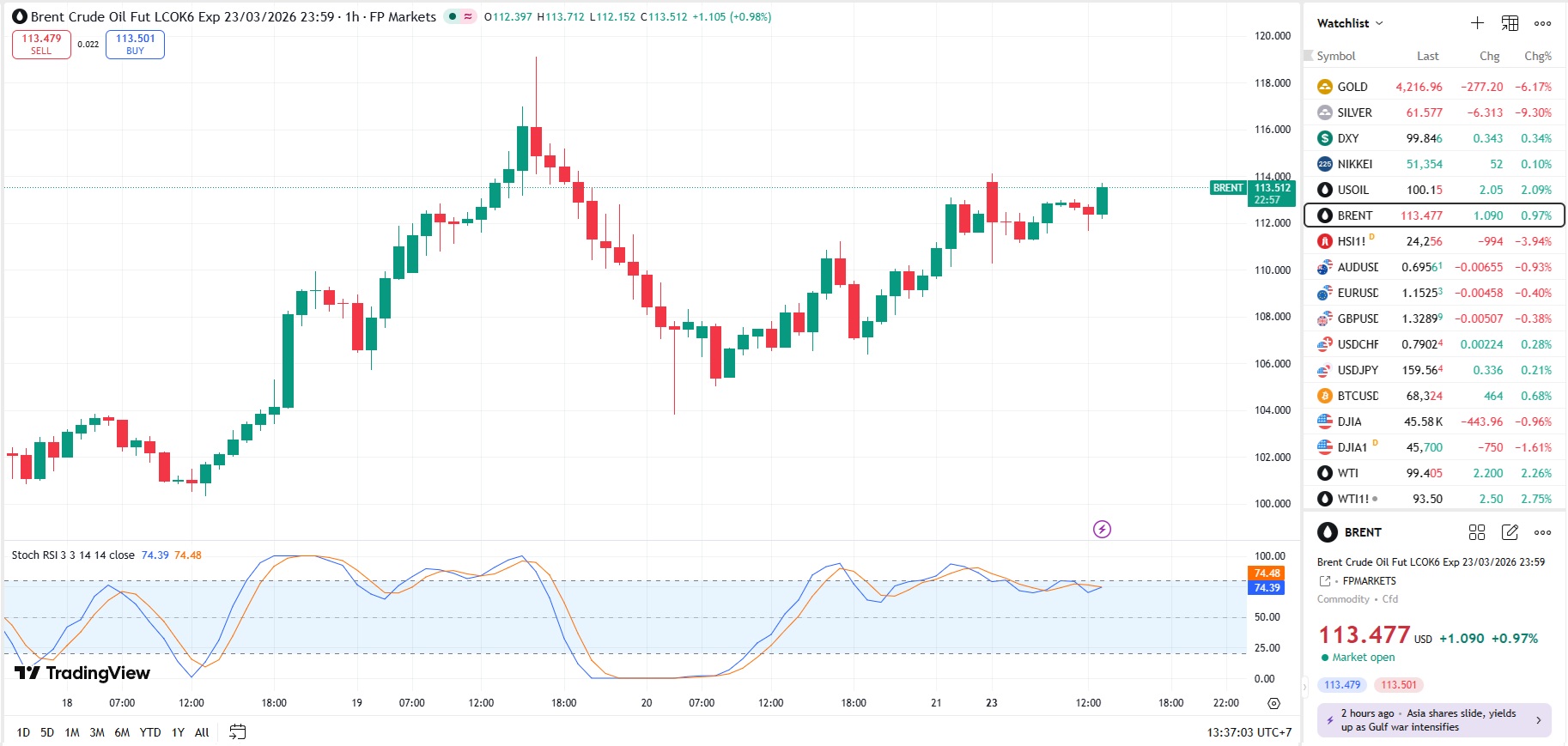
Oil prices returned to wild swings: Brent rose 0.6% to US$112.89 per barrel and is already 55% higher so far this month, while WTI rose 0.9% to US$98.98. While short-term supply was helped by US permits for the sale of Iranian and Russian oil from tankers, the price curve showed concerns of a longer-term shortage—Brent rose about US$2 to US$93.90 in September. AMP warns that oil could reach US$150 if the war continues and infrastructure damage slows supply recovery. HSBC highlights the spillover effects of inflation: Singapore's aviation fuel price has risen 175% this year, Asia's LNG has risen 130%, bunker fuel has surged, and fertilizer prices have risen—a combination that could potentially drive up logistics costs and food prices.
Oil prices at the time of this analysis were released were at: $113.47
- Buy if the price moves below $108.47
- Sell if the price moves below $118.47
Resistance 2: $114.68
Resistance 1: $114.09
Support 1: $112.53
Support 2: $111.56
Disclaimer: This article is analytical in nature and is not a definitive reference. Please consider the influence of fundamental and technical developments on trading before making any investment decisions.
Source: Newsmaker.id