Oil Remains Expensive, Temporary Correction Doesn't Eliminate Energy Inflation Risk
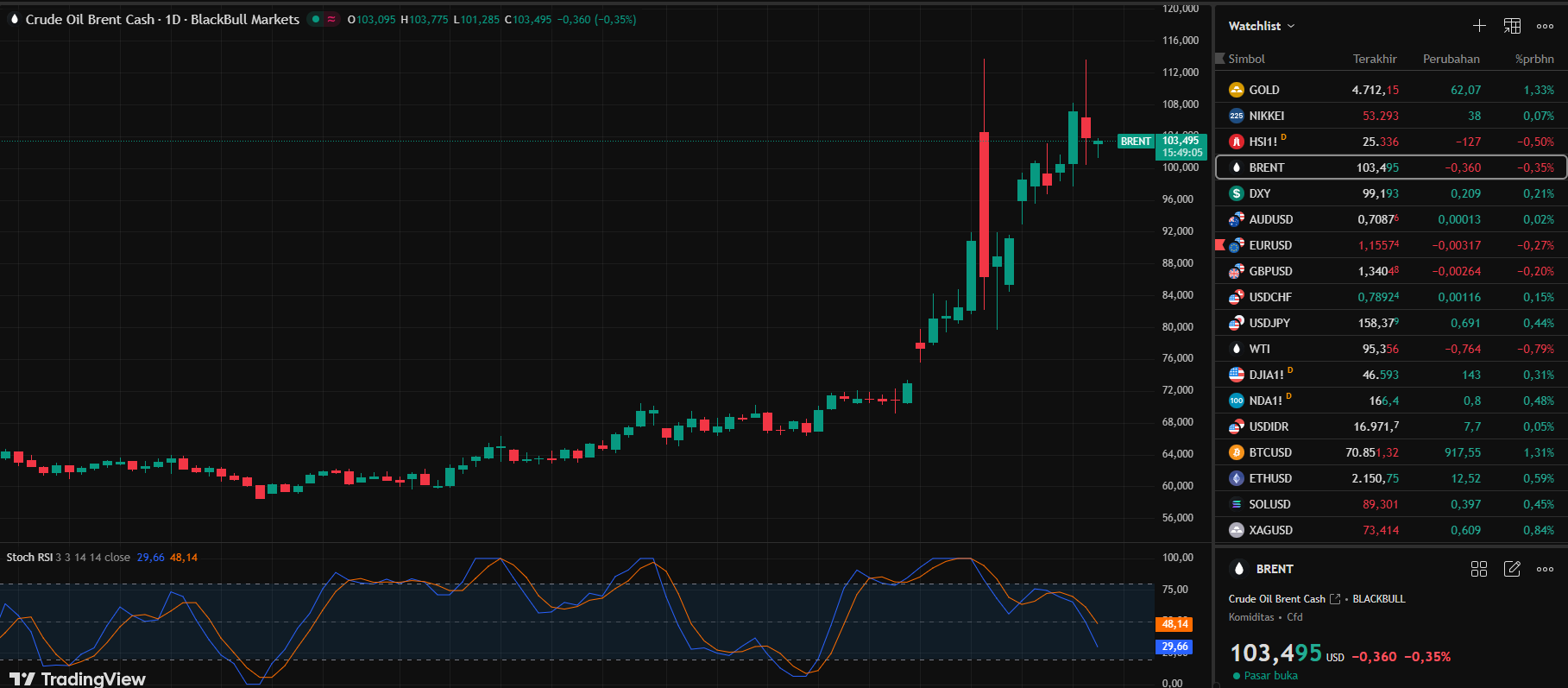
Brent fell to around US$103 after briefly surging to US$113 and hitting yesterday's low of US$100, reflecting a market that began to reduce positions after a rapid surge. The primary cause was profit-taking following the headline-driven spike, plus the market began to "recalculate" whether the latest escalation had truly turned into a physical supply disruption (production/exports/shipping), or whether temporary risks remained dominant.
The correction also occurred because investors' focus shifted from "news attacks" to more concrete indicators: tanker flows, smooth exports, and energy facility operations. If there is no evidence of persistent supply cuts (e.g., exports continue or shipping routes remain operational), the risk premium tends to shrink from its peak, and Brent falls from 113 to the 103 area. However, the 103 level is still high, meaning the market still attaches a risk premium, but not as high as during yesterday's panic bidding.
The impact on the global economy is primarily through inflation and cost channels. Persistently high oil prices increase the risk of energy inflation, pushing up transportation and logistics costs, and depressing consumer purchasing power. This could complicate central banks' policy paths: if energy inflation persists, the room for interest rate cuts narrows, while growth could slow due to rising costs. For energy importing countries (Europe, much of Asia), the risk is greater due to pressure on import costs and current account balances.
Oil prices at the time of this analysis were released were at: $103.49
- Buy if the price moves below $101.91
- Sell if the price moves below $104.40
Resistance 2: $107.82
Resistance 1: $105.33
Support 1: $100.35
Support 2: $97.86
Note: This article is analytical in nature and is not a definitive reference. Please consider the influence of fundamental and technical developments on trading before making any investment decisions.
Source: Newsmaker.id